Home Blog

Small Group Activities for Kindergarten: A Complete Guide for Engaging, Effective Learning

0
small group activities for kindergarten

Small group activities for kindergarten are one of the most powerful tools teachers can use to support early learning. When children work in small groups, they receive more attention, feel more confident, and engage more deeply with lessons. These activities help build academic skills, social development, and independence in a way that whole-group instruction often cannot.

In this complete guide, you’ll discover why small group instruction matters, how to plan it successfully, and dozens of practical small group activities for kindergarten that work in real classrooms.

Why Small Group Activities Are Important in Kindergarten

Kindergarten students are at a critical stage of development. They learn best through interaction, play, and guided exploration. Small group learning allows teachers to meet children where they are.

Key benefits of small group activities:

  • Individualized instruction
  • Better classroom management
  • Stronger student engagement
  • More opportunities for observation and assessment
  • Increased confidence for shy learners

Small group activities also support differentiated instruction, making them ideal for mixed-ability classrooms.

What Is a Small Group in Kindergarten?

A small group typically includes 3–6 students working together on a focused activity. The teacher may lead the group directly or observe while students work independently.

Small groups can be:

  • Teacher-led
  • Student-led
  • Skill-based
  • Interest-based
  • Ability-based (flexible and rotating)

The key is flexibility. Groups should change often based on student progress and needs.

How to Structure Small Group Time in Kindergarten

Before choosing activities, it’s important to structure your small group time effectively.

1. Set Clear Expectations

Teach students:

  • How to move to groups
  • How to use materials
  • How to work quietly
  • How to ask for help

Practice routines early in the year.

2. Use a Rotation Model

Common small group rotation setups include:

  • Teacher table
  • Independent work station
  • Hands-on learning center
  • Literacy or math station

Each rotation usually lasts 10–15 minutes, depending on attention span.

3. Keep Materials Simple

Overly complicated materials slow learning. Use:

  • Manipulatives
  • Picture cards
  • Whiteboards
  • Simple worksheets
  • Everyday classroom items

Literacy Small Group Activities for Kindergarten

Literacy skills develop rapidly in kindergarten. Small groups allow children to practice reading, writing, and phonics at their own pace.

1. Letter Sound Sorting
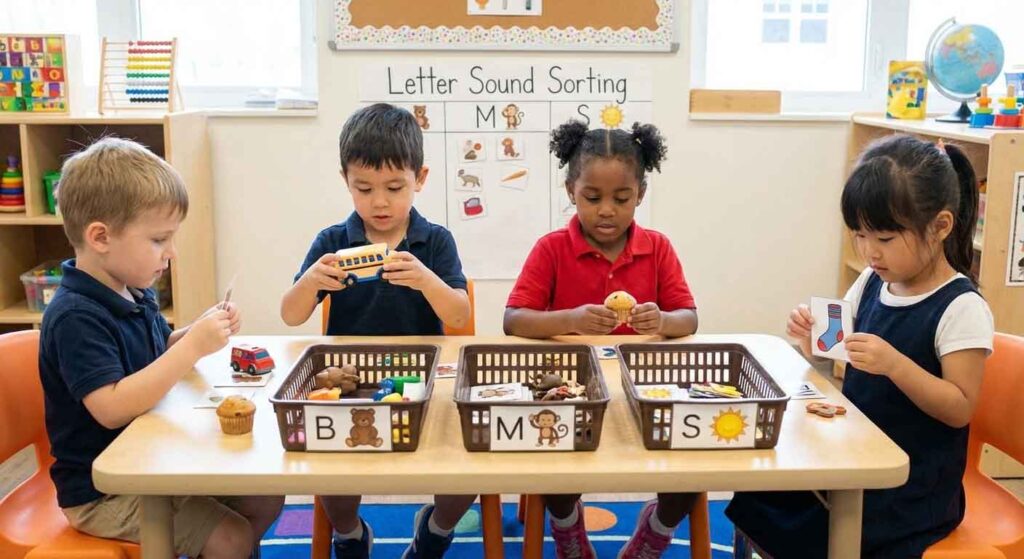
Letter Sound Sorting-small group activities for kindergarten

Students sort pictures by beginning sound.

Skills developed:

  • Phonemic awareness
  • Letter-sound correspondence

Materials:

  • Picture cards
  • Letter cards
  • Sorting mats

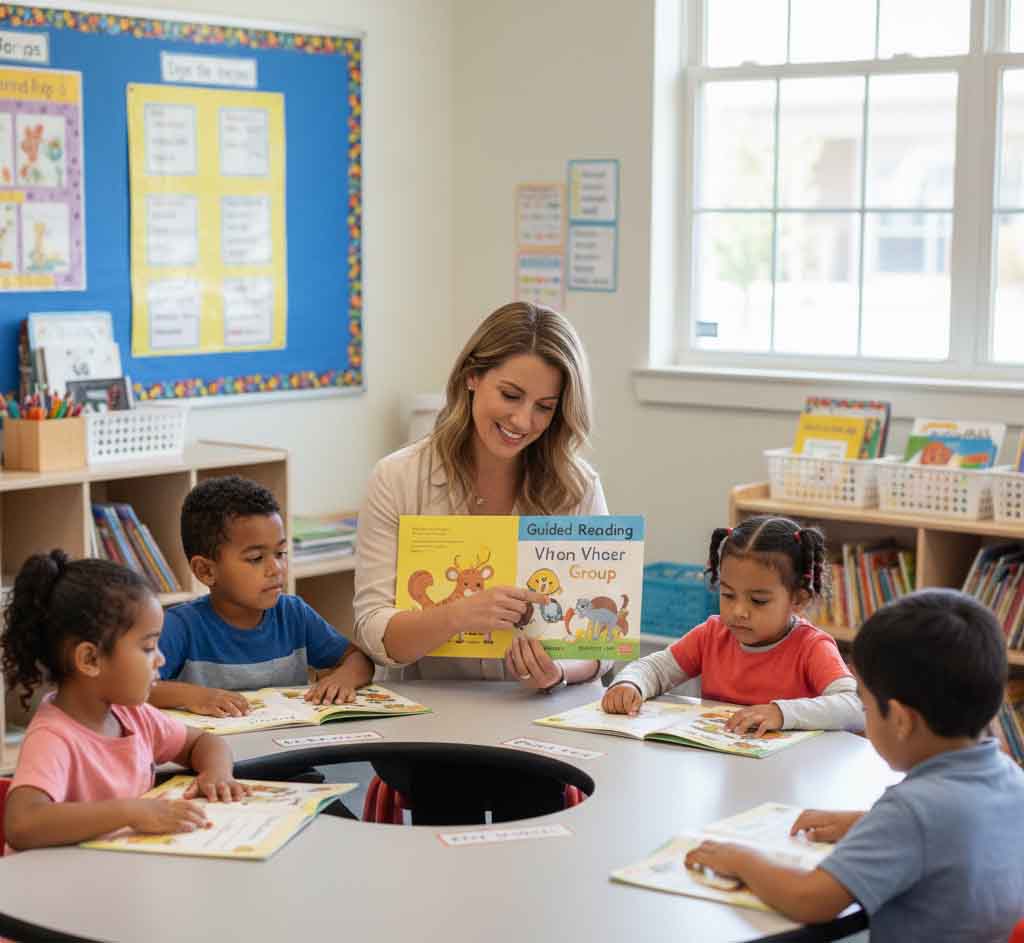
2. Guided Reading Groups

Guided Reading Groups-small group activities for kindergarten

Read simple books together while focusing on:

  • Sight words
  • Decoding strategies
  • Comprehension

Ask open-ended questions and encourage predictions.

3. Sight Word Games
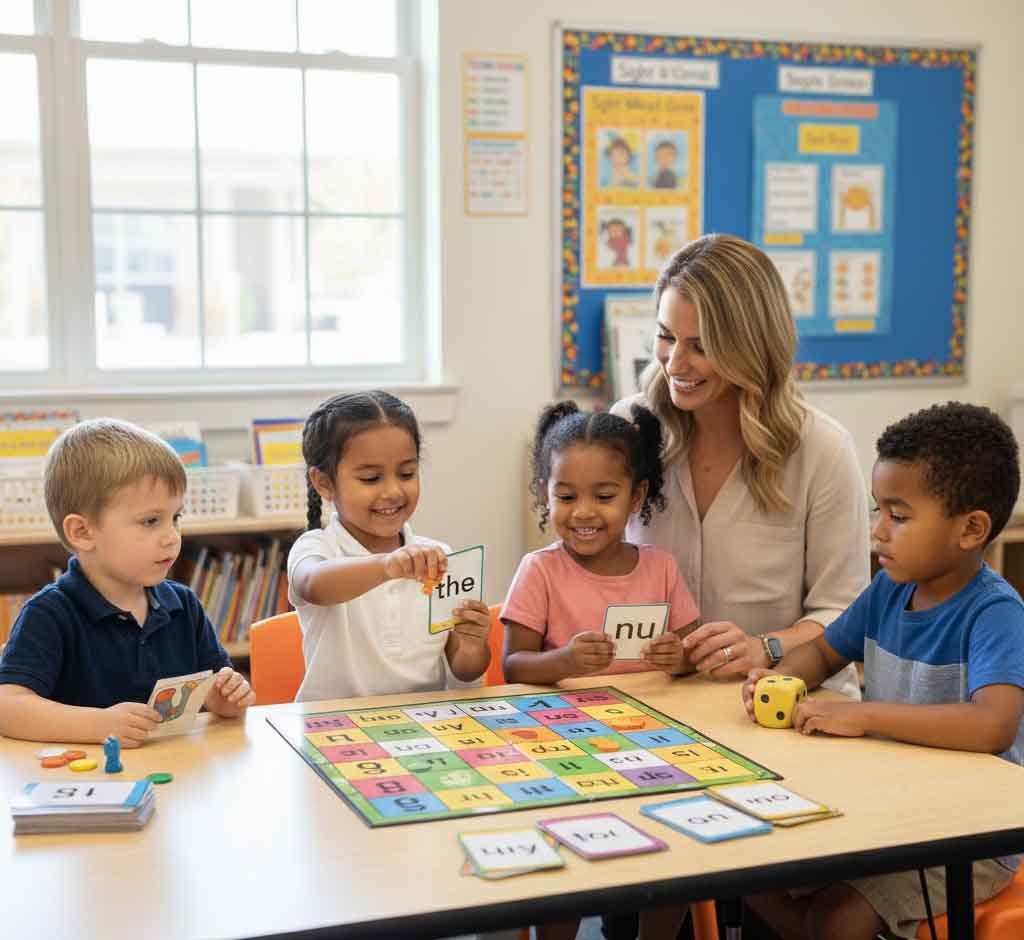
Sight Word Games-small group activities for kindergarten

Use games such as:

  • Sight word bingo
  • Word matching
  • Build-a-word with letter tiles

Games reduce pressure and increase motivation.

4. Sentence Building
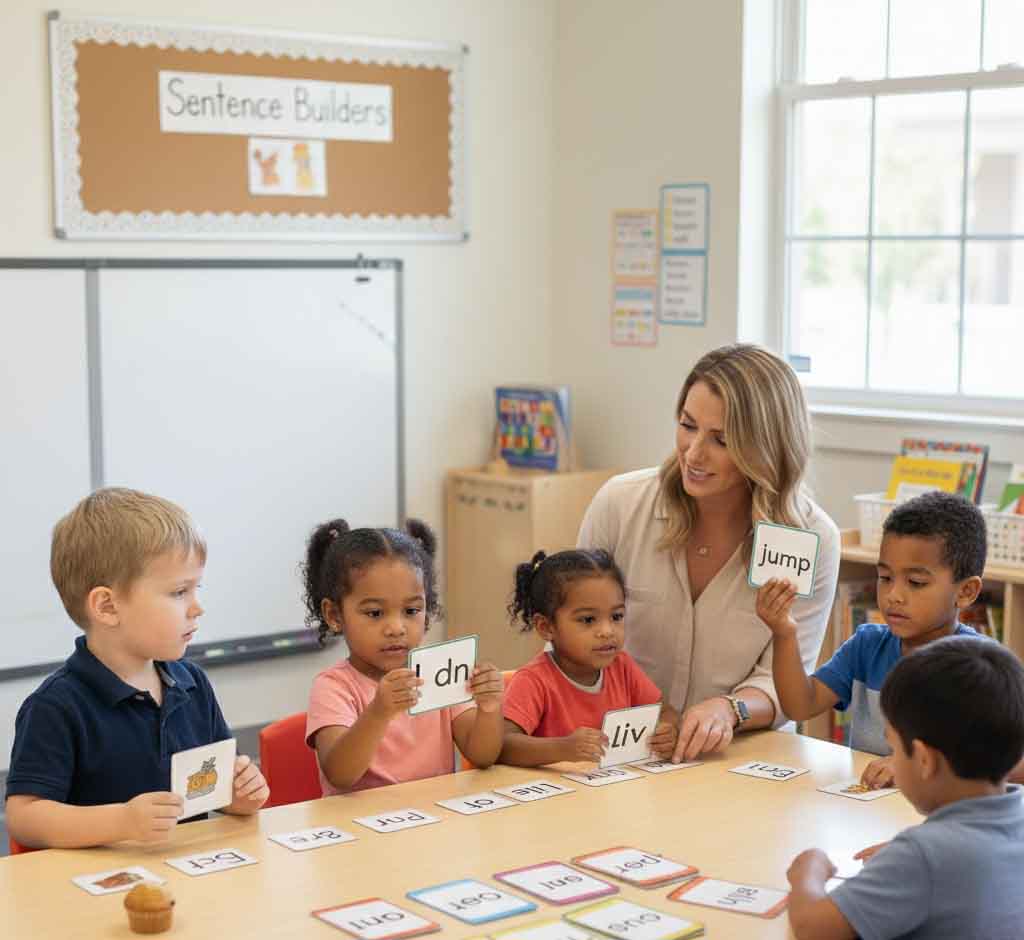
Sentence Building

Provide word cards and have students build simple sentences.

Example:

I see a cat.

This builds:

  • Sentence structure
  • Confidence in writing
  • Understanding of word order

Math Small Group Activities for Kindergarten

Math small group activities help children develop number sense through hands-on learning.

5. Counting with Manipulatives
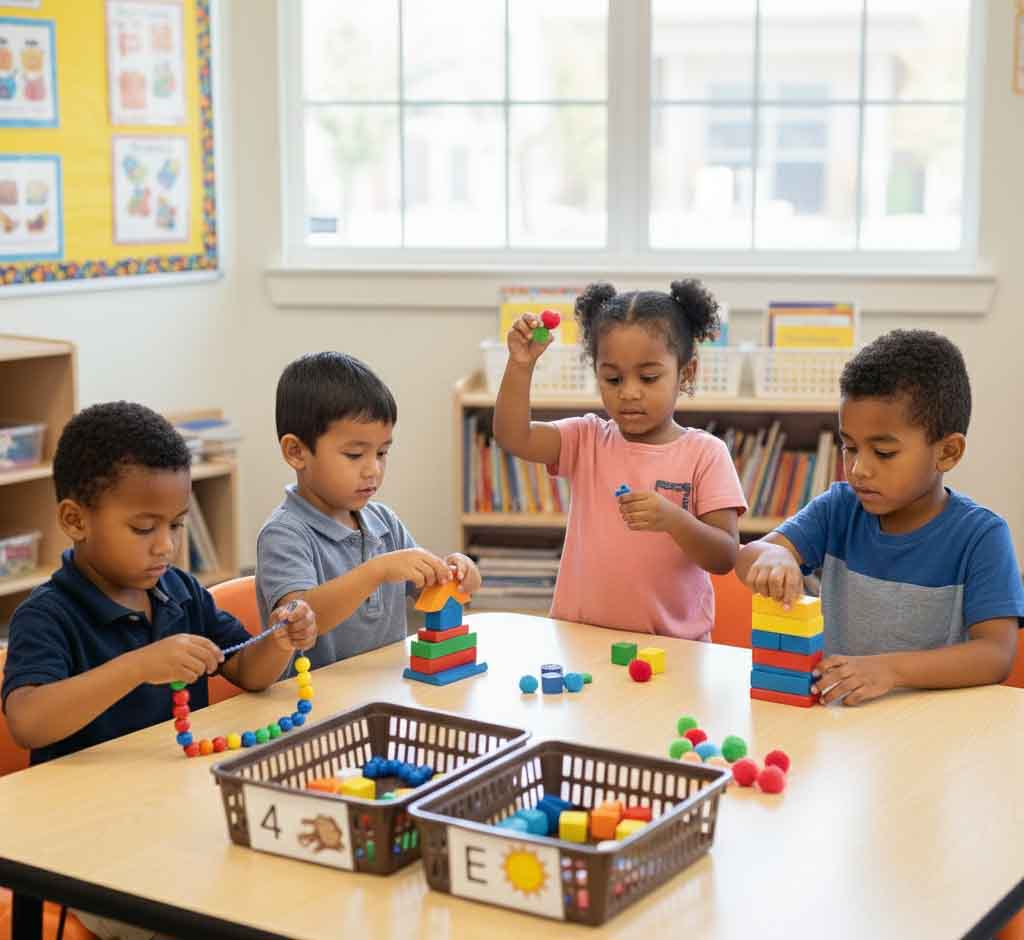
Counting with Manipulatives

Students count objects such as:

  • Cubes
  • Buttons
  • Bears
  • Beans

Have them:

  • Count aloud
  • Match numbers to quantities
  • Compare amounts

6. Number Matching

Match numerals to:

  • Dot cards
  • Ten frames
  • Quantity pictures

This reinforces number recognition and understanding.

7. Simple Addition Games

Use objects to solve basic problems.

Example:

2 blocks + 1 block = ?

Hands-on math makes abstract ideas concrete.

8. Shape Exploration

Provide shapes and challenge students to:

  • Sort by size
  • Sort by shape
  • Build pictures using shapes

This supports geometry and spatial awareness.

Fine Motor Small Group Activities for Kindergarten

Strong fine motor skills are essential for writing and independence.

9. Playdough Letters
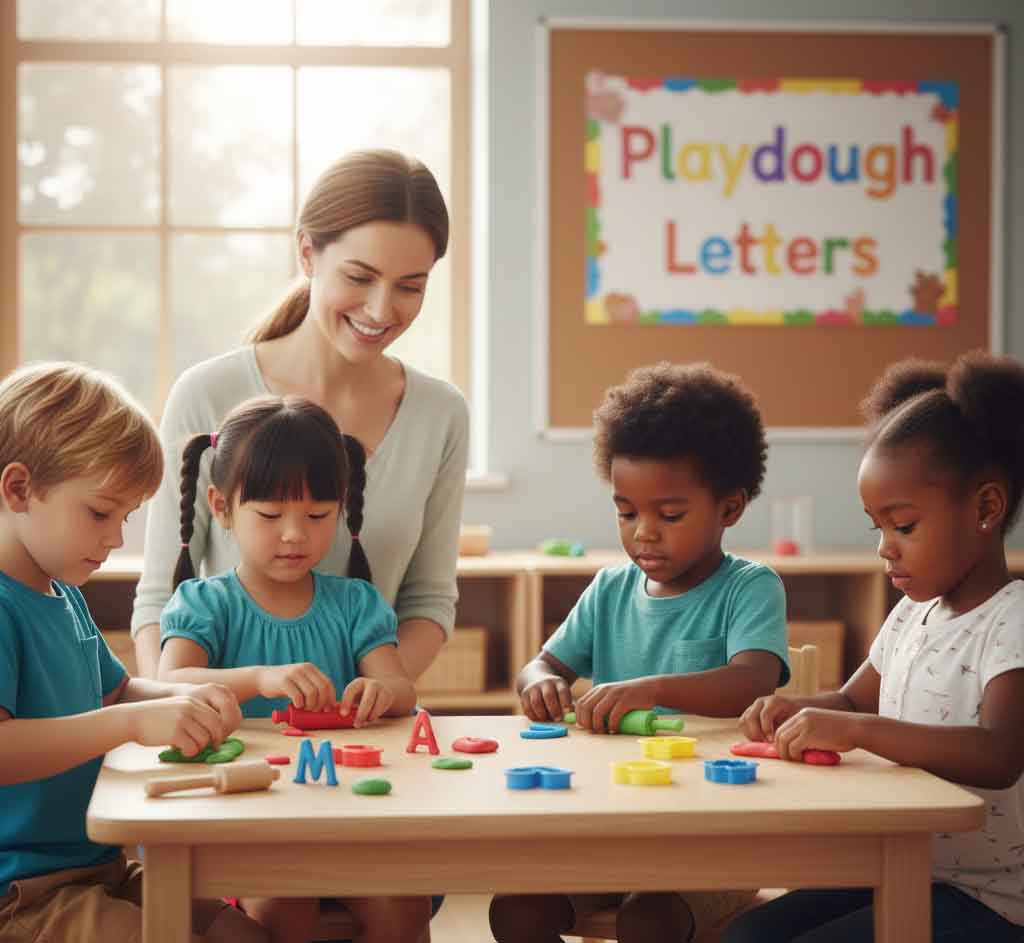
Playdough Letters

Students form:

  • Letters
  • Numbers
  • Shapes

This strengthens hand muscles while reinforcing academic skills.

10. Cutting Practice

Offer cutting strips with:

  • Straight lines
  • Curves
  • Zigzags

Cutting builds hand-eye coordination and control.

11. Beading Patterns

Children create patterns using beads or pasta.

Skills developed:

  • Pattern recognition
  • Fine motor control
  • Focus and patience

Social and Emotional Learning Small Group Activities

Small groups are perfect for teaching social skills in a safe, supportive environment.

12. Turn-Taking Games
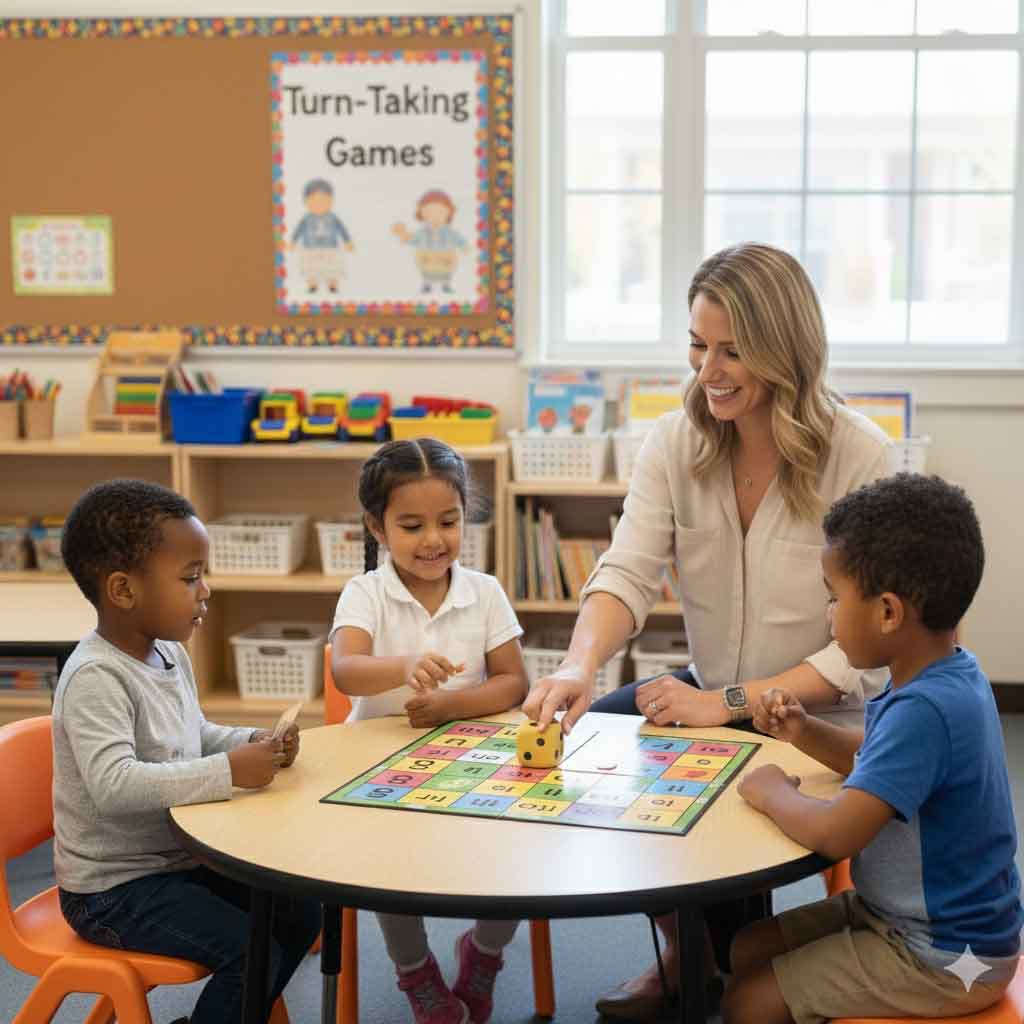
Turn-Taking Games

Play simple board or card games that require waiting and sharing.

Students practice:

  • Patience
  • Cooperation
  • Emotional regulation

13. Emotion Sorting

Use picture cards showing emotions.

Ask students to:

  • Name emotions
  • Share when they felt that way
  • Role-play responses

This builds emotional awareness and empathy.

14. Problem-Solving Scenarios

Present simple situations:

“What can you do if two people want the same toy?”

Encourage discussion and solutions.

STEM Small Group Activities for Kindergarten

STEM activities encourage curiosity and critical thinking.

15. Building Challenges
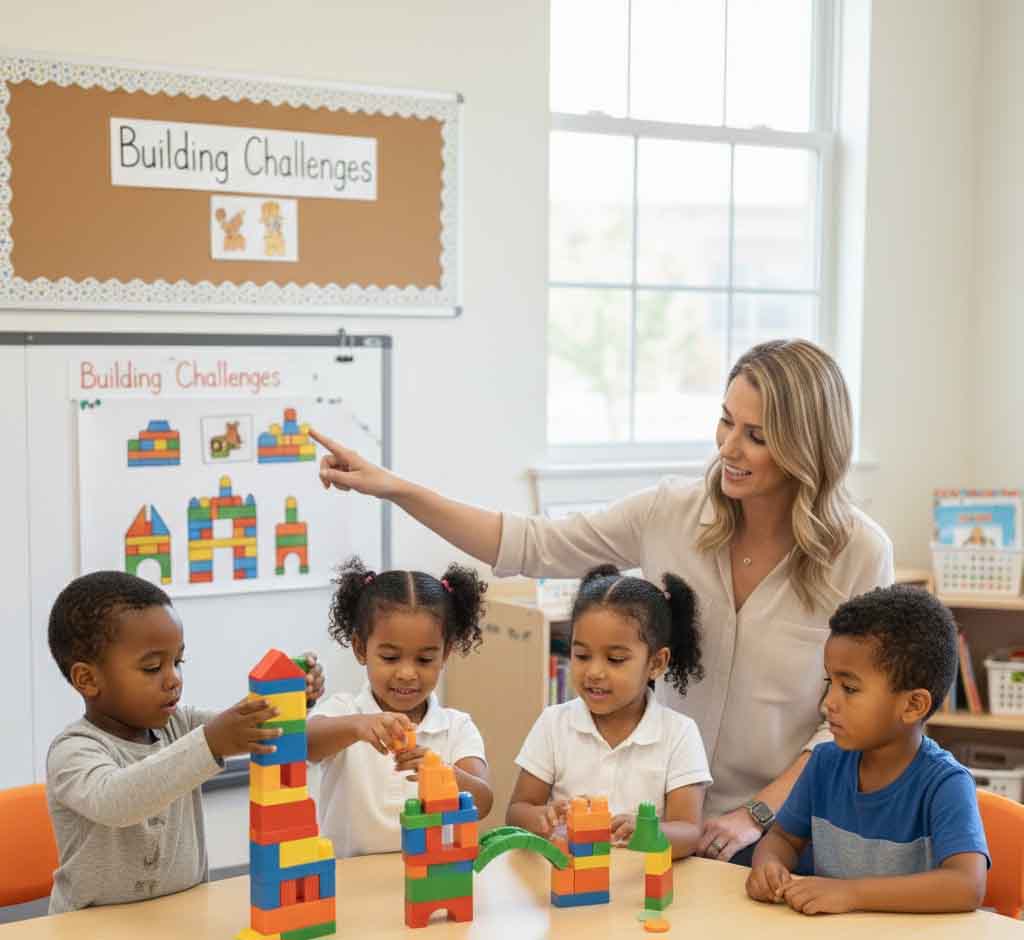
Building Challenges

Give students materials such as:

  • Blocks
  • Cups
  • Paper tubes

Challenge them to:

  • Build the tallest tower
  • Create a bridge
  • Design a house

16. Sink or Float Experiments

Test classroom objects in water.

Ask students to:

  • Predict outcomes
  • Observe results
  • Discuss findings

This introduces scientific thinking naturally.

17. Simple Coding Games

Use directional cards (up, down, left, right).

Students guide a toy or character to a destination.

This builds:

  • Logic
  • Sequencing
  • Problem-solving

Art and Creativity Small Group Activities

Creative expression is vital in kindergarten learning.

18. Directed Drawing
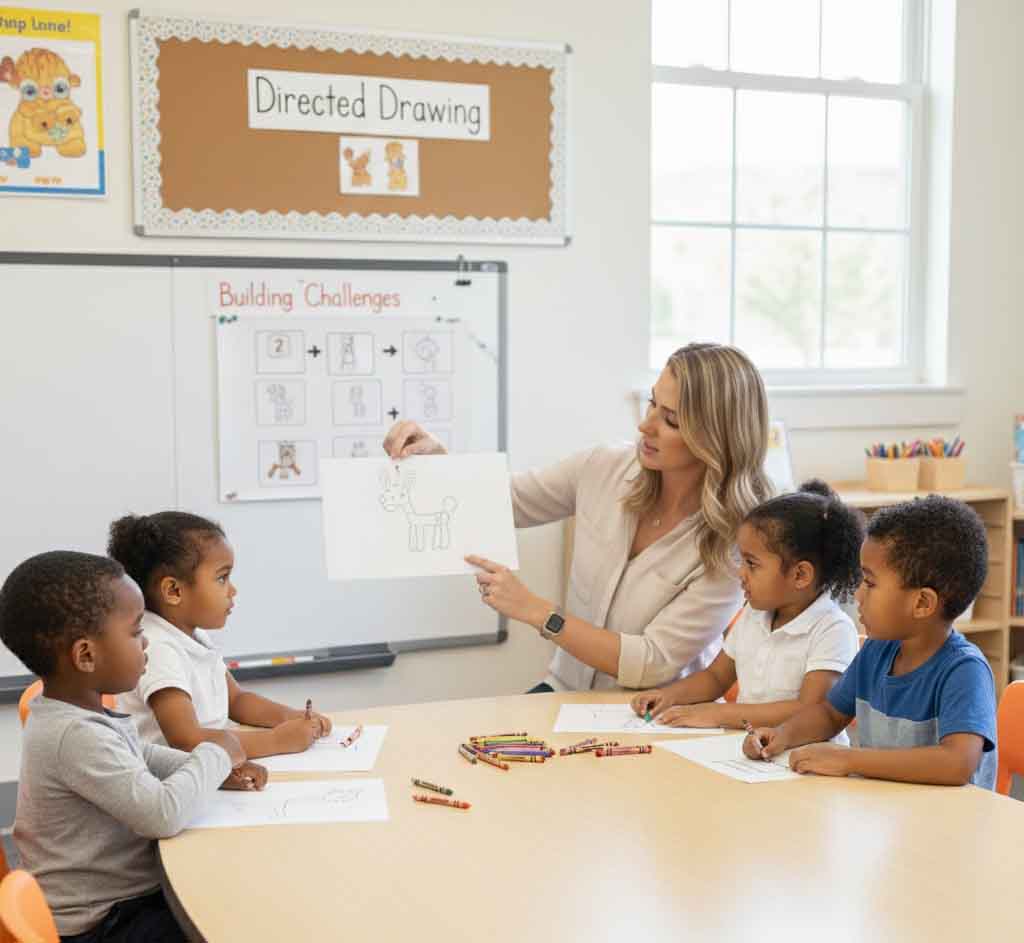
Directed Drawing

Guide students step-by-step to draw an image.

This improves:

  • Listening skills
  • Confidence
  • Fine motor control

19. Collage Creation

Provide magazines, paper scraps, and glue.

Let students create themed collages:

  • Animals
  • Seasons
  • Colors

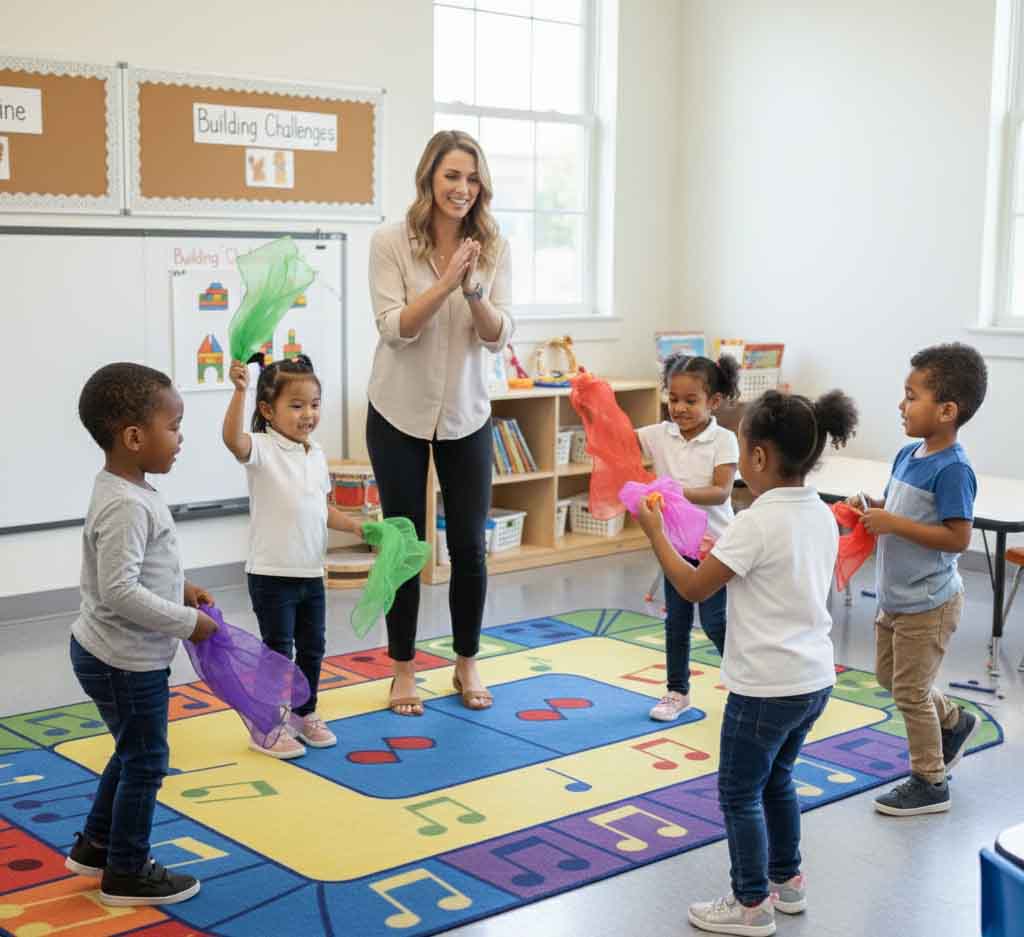
20. Music and Movement

Music and Movement

Use rhythm sticks or clapping patterns.

Students follow patterns and create their own rhythms.

Differentiation in Small Group Activities

Not all students learn at the same pace. Small group instruction makes differentiation manageable.

How to Differentiate Effectively:

  • Change task difficulty
  • Adjust pacing
  • Provide extra support
  • Offer extension activities

Flexible grouping ensures every child receives appropriate challenges.

Classroom Management Tips for Small Group Success

Small group activities only work when routines are clear.

Best practices:

  • Teach expectations explicitly
  • Use visual schedules
  • Keep instructions short
  • Prepare materials ahead of time
  • Start with short sessions

Consistency builds independence.

Assessing Learning During Small Groups

Small group time is ideal for informal assessment.

What to observe:

  • Skill mastery
  • Participation
  • Communication
  • Problem-solving strategies

Use:

  • Checklists
  • Notes
  • Quick assessments

This data helps guide future instruction.

Common Challenges and Solutions

Challenge: Students Finish Too Quickly

Solution: Provide extension tasks or challenge cards.

Challenge: Noise Levels

Solution: Teach voice levels and use visual cues.

Challenge: Students Needing Constant Help

Solution: Model independence and use help cards.

How Often Should You Use Small Group Activities?

Ideally, small group activities should be used daily in kindergarten. Even 30–45 minutes per day can make a significant impact.

Short, consistent sessions are more effective than long, infrequent ones.

Final Thoughts: Why Small Group Activities Matter

Small group activities for kindergarten create meaningful learning experiences. They allow teachers to connect with students, address individual needs, and build essential academic and social skills.

When thoughtfully planned and consistently implemented, small group instruction transforms the classroom into a space where every child feels seen, supported, and capable.

Whether you are teaching literacy, math, SEL, or STEM, small group activities help kindergarten students grow with confidence and joy.
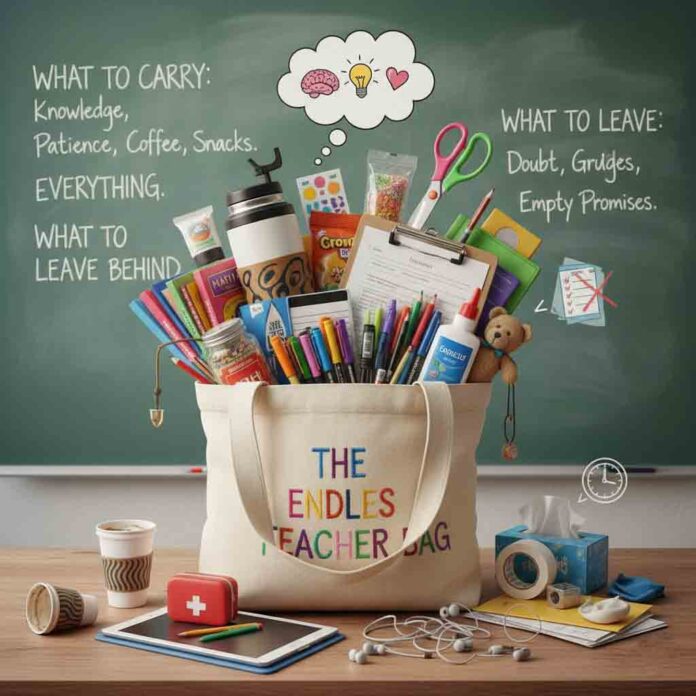

The Endless Teacher Bag: What Teachers Really Need to Carry (and What to Leave Behind)

0
The Endless Teacher Bag

Teachers are famous for carrying everything in their bags—lesson plans, student work, stickers, snacks, and sometimes an entire classroom’s worth of supplies. Many even upgrade to oversized totes, rolling carts, or heavy backpacks just to keep up, creating what feels like The Endless Teacher Bag. And while teachers shouldn’t have to take work home, the reality is that planning, grading, and prepping often spill into our evenings.

If you’ve ever wondered what you should actually bring home or what belongs in your teacher bag, this guide will help you stay organized, avoid burnout, and carry only what truly matters.

What Should You Really Bring Home?

If you’re a new teacher, it’s easy to think you need to bring home every manual, workbook, and unfinished task. I did exactly that during my first year—and it quickly became exhausting.

Here’s the truth:
The fewer things you bring home, the happier and healthier you’ll be.

Overloading yourself leads to a cycle of stress:

  • You bring home too much work.
  • You don’t rest.
  • You return to school tired.
  • You fall behind again.
  • And the cycle repeats.

Burnout happens fast when your school bag becomes a second full-time job.

Healthy teacher tip:
You don’t have to grade every single paper.
You don’t have to take every worksheet home.
It’s okay—encouraged, even—to toss unnecessary papers.

Your time and energy are valuable. Protect them.

Teacher Endless Bag Essentials: What Every Teacher Should Carry

If you’re building your first teacher bag or trying to simplify your current one, start with the essentials. These items truly support productivity, creativity, and daily teaching tasks.

1. Laptop (Preferably School-Issued)

Bring your district-issued laptop if needed, but avoid using your personal one unless it’s insured. Kids, spills, and classroom chaos happen!

2. Notebook or Planner

Use it to:

  • Brain-dump ideas
  • Track student notes
  • Jot reminders
  • Sketch lesson plans

You can also use a digital notes app on your school laptop if you prefer.

3. Pens, Pencils, and Highlighters

Keep a small selection of your favorites. Teachers often love:

  • Flare pens
  • Highlighters
  • Sharpies

Just choose what you’re comfortable with.

4. Post-It Notes

The most versatile teacher tool ever. Use them for:

  • Quick reminders
  • Student notes
  • Mini anchor charts
  • To-do lists

5. Stamps or Stickers

A fast way to celebrate student work without spending time writing notes on each page.

6. Dry Erase Markers

Essential for modeling problems, writing goals, or teaching on the board.

7. Regular or Poster Markers

Great for anchor charts, vocabulary walls, and classroom visuals.

Essential Items for Your Classroom or Teacher Bag

Here’s a simplified checklist:

Teacher Bag Must-Haves

  • Laptop (school-issued)
  • Notebook or planner
  • Pens, pencils, and highlighters
  • Sharpies or Flare pens
  • Post-it notes
  • Stamps or stickers
  • Dry erase markers
  • Regular or poster markers

Bonus Items to Make Your Day Easier

  • Snacks
  • Water bottle
  • Lip balm
  • Hand sanitizer
  • Tissues
  • Mini first-aid kit
  • Charger or power bank
  • Coffee tumbler
  • Extra hair ties or clips
  • Small pouch for supplies

Ways to Elevate Your “Mary Poppins” Teacher Bag

“A spoonful of sugar helps the medicine go down…” and in teaching, that “sugar” is definitely snacks.

You teach, talk, walk, and solve problems all day—your body (and mood) need fuel.

Here are quick, nutritious, zero-prep snack ideas:

  • Apple or pear slices with peanut, almond, or sunflower butter
  • Greek yogurt with honey or granola
  • Babybel or string cheese with whole-grain crackers
  • Trail mix with nuts, seeds, and dark chocolate
  • Rice cakes with nut butter and banana
  • Hummus cups with pretzels or veggies

Try This Easy Gluten-Free Energy Ball Recipe

Ingredients

  • 1 cup nut butter (almond, peanut, or sunbutter)
  • ¼ cup honey
  • 2 tbsp chia seeds
  • 5 tbsp water
  • ½ cup shredded coconut
  • ¼ tsp vanilla
  • Pinch of sea salt

Instructions

  1. Mix chia seeds and water; let sit 10–15 minutes.
  2. Combine nut butter, honey, vanilla, and coconut.
  3. Add chia gel; stir well.
  4. Adjust texture by adding more coconut if needed.
  5. Roll into balls and refrigerate 30–45 minutes.

These last up to three months and are perfect for on-the-go energy.

Bonus Tips for Staying Organized and Balanced

Your teacher bag is only part of the story. Staying organized at home helps you avoid the constant “Where did I put that?” loop.

Try these quick habits:

1. Create a “Teacher Corner” at Home

It can be a small office, a corner of the kitchen, or just one shelf.
Keep:

  • Notebooks
  • Craft supplies
  • Extra worksheets
  • School materials

Having everything in one place makes planning easier.

2. Empty Your Bag Every Day

Shake out the papers, trash, and supplies.
This prevents clutter and gives your mind a reset.

3. Pack Your Bag the Night Before

Put in:

  • Non-perishable snacks
  • Papers you actually need
  • Graded work
  • Your planner

You’ll feel calmer in the morning.

Closing Thoughts on The Endless Teacher Bag

Teaching requires heart, passion, and energy—but that doesn’t mean you have to carry your entire classroom home with you.

Choose what truly matters.
Leave the rest behind.
Your future self will thank you.

Be kind to yourself. You don’t need every supply in the world—just the essentials that support your teaching, your balance, and your peace of mind.

What Are Heart Words? A Teacher’s Guide to Building Early Readers

0
What Are Heart Words

Introduction

What Are Heart Words — Reading is such an essential part of our lives, but learning to read is even more important. When a child learns to read, the possibilities are endless. However, reading can be challenging to master. As someone who struggled with learning to read, I didn’t know how to read until I was in 2nd grade, and I didn’t start loving reading until middle school. Now, as a teacher, I see many students struggling to read, especially irregular words like “was” or “said.”

They are words that kids need to know “by heart,” or in other words, memorize. The purpose of “heart words” is to teach the word parts to students so they can read them fluently.

What Are Heart Words?

Heart words are not fully decodable, and they contain irregular spellings, for example, the word was /wəz/ or the word from /frəm/. Both of thoes words make the “uh” sound, which is a schwa. This is important to learn to help students learn the tricky part “by heart.” This isn’t something that students will be able to decode. 

Heart Words vs. High-Frequency Words

What are high-frequency words vs heart words? High-frequency words appear often in print. Some are decodable, for example, words like “like” or “can.” The irregular words that we cannot decode easily are words like “said,” “from,” and “was.” All of these words are high-frequency; only some of them are heart words. Heart Words are a subset of high-frequency words that are not fully decodable.

I’ve included a table to visually compare Heart Words vs. High-Frequency Words.

FeatureHigh-Frequency WordsHeart Words
FrequencyAppear often in textAppear often in text
DecodabilitySome are decodable, some notUsually not fully decodable
Teaching methodPhonics + memorizationFocus on memorizing the irregular part
GoalFluency and comprehensionRecognize tricky parts “by heart”

Section 3: Why Are Heart Words Important?

  • Crucial for reading fluency and confidence.
  • Make up a large portion of early texts.
  • Learning them unlocks access to more meaningful reading experiences.

Section 4: The Science Behind Heart Words

  • Tied to orthographic mapping (how brains connect sounds to letters).
  • Supported by the Science of Reading approach.
  • Helps build a sight word bank over time.

Section 5: How to Teach Heart Words

  • Break down the word into decodable and non-decodable parts.
  • Highlight the “tricky” part with a heart or color.
  • Use multi-sensory strategies: air writing, tapping, building the word with magnets.
  • Use frequent repetition and exposure in meaningful contexts.

Section 6: Common Mistakes to Avoid

  • Rote memorization of whole words without connecting to phonics.
  • Teaching all high-frequency words as heart words.
  • Giving too many words at once without adequate practice.

Section 7: Tools and Resources

  • Suggested lists: Dolch, Fry, or school-approved high-frequency word lists.
  • Heart word flashcards, pocket charts, heart-word journals.
  • Printable word mats, games, digital tools, and apps.

Conclusion

  • Reinforce the value of heart words in a structured literacy approach.
  • Encourage consistency, patience, and celebrating small wins.
  • Invite teachers or parents to comment with strategies or questions.

Optional Add-ons

  • 🎁 Free printable: Top 20 Kindergarten Heart Words with Visual Cues
  • 🎥 Optional video tutorial for teaching heart words.

📥 Downloadable parent handout: “What Are Heart Words and Why Do They Matter?”

First Day of Kindergarten: A Real-World Classroom Guide

0
First Day of Kindergarten

Introduction: A Practical Approach to the First Day of School

This blog was inspired by the book The First Six Weeks of School, an excellent resource for new teachers. I’ve read it several times, and it’s been helpful in preparing for the first day. While the book is full of useful ideas, it can feel overwhelming to process all the information at once.

Instead of listing everything you must do, this blog offers a more practical approach. It presents ideas to help shape your first day—not a checklist, but a helpful guide. The goal is to help your first day flow more smoothly and feel less stressful.

Before the First Day of Kindergarten

Preparing Your Classroom

Having access to your classroom during the summer can make planning easier. Unfortunately, that’s not always possible. Some school districts collect your keys during the break and only return them shortly before the year begins.

Even if you only have a day or two to get ready, focus on the basics. Start by preparing student name tags—place them on tables or cubbies. Each child should know where to hang their backpack and place school items. Labeling these areas clearly helps create a sense of security and order.

Seating and Class Dynamics

On the first day, make sure students can find their names on their seats. Avoid assigning permanent spots too soon since you haven’t observed how students interact. Use flexible seating or play centers to better understand class dynamics. I’ll discuss center ideas later in the blog.

Handling Roster Changes

Expect roster changes—sometimes even hourly. Keep an updated list and wait until the morning to print it. If a new student is added last minute, write their name on a blank tag or kindly explain the delay. Making them feel included is what matters most.

Medical and Emergency Information

Ideally, you’ll have access to students’ emergency cards, allergy alerts, IEPs, or 504s. While that’s not always possible on day one, parents often communicate urgent concerns, especially about allergies.

The Morning Routine

Setting the Tone

Once the first day begins, I ensure students wear name tags throughout the day. On each table, I place a simple coloring page that says “Welcome to Kindergarten” and provide broken crayons from the previous year.

Why Broken Crayons?

Broken crayons help students develop fine motor skills. They encourage a better pencil grip by strengthening the pincer grasp. I don’t introduce pencils until I’ve evaluated where each student stands in their motor development.

Labeling for Safety

Each name tag includes the student’s first name, my name, and the classroom number. If a student gets lost, this ensures they’re quickly returned to class.

Easing Separation Anxiety

Some students may feel anxious when parents leave. I guide them to a peace corner where they can sit with their parents for a short time. This is the only day I allow extended parent presence.

Once the child calms down, I gently ask the parent to leave. If the child becomes upset again, I provide a comfort toy to help them settle into the environment.

Morning Meeting and Community Circle

Starting the Day Together

We begin with a simple morning message. Since many students are still warming up, I read it aloud. I introduce myself and explain classroom expectations, such as raising hands or using signs for water and bathroom. I also use ASL (American Sign Language) for visual reinforcement.

Keeping It Light

I avoid academic tasks on the first day. Instead, I share the schedule with the class to help them feel secure. This is particularly helpful for students with autism.

Building Community

We sit on the rug in what I call a “community circle.” I explain the guidelines:

  • Sit properly
  • Be an attentive listener
  • Wait your turn to speak (use the talking object)
  • Be kind and respectful

Name Game: Name Toss

We play Name Toss to help everyone learn names. Here’s how:

  1. Sit or stand in a circle.
  2. The first student says their name.
  3. The person to their left says their name.
  4. Continue around the circle.
  5. Use a timer to see how fast everyone can go.

Summer Sharing

After the game, I ask students to share something they enjoyed over the summer. I model the sentence: “This summer I enjoyed __________.” For example: “This summer I enjoyed going to the beach.”

Some students may choose not to speak. That’s okay. Give them time to build confidence.

First Read-Aloud and Story Activity

Recommended Books

Choose a story for the first day. Some good choices are:

  • The Kissing Hand
  • Miss Bindergarten Gets Ready for Kindergarten
  • A Letter From Your Teacher on the First Day of School
  • If You Take a Mouse to School

These books encourage connection and conversation.

Post-Reading Activity

After the read-aloud, I assign a simple activity related to the book. For The Kissing Hand, students draw their face and circle how they feel.

You can also add this poem:

My First Day of School
Inspired by The Kissing Hand by Audrey Penn

It’s my first day of school,
And The Kissing Hand we read.
It’s all about a raccoon
Who felt nervous, just like me.

His mom gave him a kiss,
To help him feel okay.
He kept it in his hand
To cheer him through the day.

Like Chester the raccoon,
I felt shy and small,
But your love and kind words
Helped me stand tall.

All throughout the year,
I’ll learn and grow each day.
And just like that sweet raccoon,
I’ll be brave in every way!

End-of-Day Routine

Teaching Transitions

Just as the morning routine is vital, the end-of-day routine is equally important. Students learn how to pack their bags and line up for dismissal. You’ll also need to guide parents on where to wait for pickup.

Managing Transportation

If students ride the bus, clarify whether you must walk them there or if a staff member does. Always line up bus riders first to avoid confusion.

The first day can be chaotic, especially for Kindergarteners. Even if you’re tired, smile. Tomorrow will be easier.

Final Thoughts

After the kids leave and you have extra time, reflect on what went well and what you need to adjust. If you feel like crying, by all means, release those emotions. I’ve been there and I understand. It’s hard and not an easy job!

I promise it gets so much easier! Lastly, the goal of the first day of school is connection, not perfection.

I included a sample of the first day of school detailed plan:

 First Day of School 

Wednesday, August 13, 2025

Early Release – Dismissal 12:45

Time 
7:50-7:55


8:03-

8:05-8:20 


8:25-9:30
Pick up Breakfast from the Cafeteria and take it with you to pick up students.

Pick up kids – They’ll be lined up by the K-building.
Have the kids come inside and grab their name tags
Breakfast-  The kids will eat outside. Tally each breakfast that gets passed out to studentsThey must choose a fruit and other breakfast itemMilk is optionalThe food that does not get eaten gets placed in a “share basket”Breakfast from absent students stays in the containerTake attendance while the kids eat breakfast
Welcome students to their new classroomHave name tags on desk (have the kids wear them)Coloring Page and read aloud (choose a book from your library book) Go over health safety – (wash your hands, use hand sanitizer)Introduce (materials box) – explain to the students what materials are in there and how to use it (responsible and respectful and safe with their materials)Talk about the different signsBathroomWaterTissueQuestionListen
9:30-9:50

9:50-10:05 
Recess (kids play at the kinder playground). We will need to cross the K- classrooms to get to the playgroundPick up kids at the ramp
Schedule- Go over the schedule written on the board. Song: “Good morning”  Model and practice- Procedures on how to move from the carpet to their desk and desk to carpet 
10:05-10:20


Community Circle at the carpetThe students will share their name and share one thing they enjoyed doing over the summer. You can play the Beach Ball Game or just pass a stuffed animal around as the talking object.  Go over community circle guidelines:-sit properly-be an attentive listener-wait for your turn to speak (talking object is your voice)-be kind and respectful
Play a name game.

1. Sit or stand in a circle. 2. Choose a student to start by saying their own name.3. Right after, the person to their left says their own name.     4. Repeat this all the way around the circle.5. Now, start a timer, and see how quickly the group can go around the circle saying their names.
After the name game:Put up a sentence frame on a sentence strip to support the students. Ex. This summer I enjoyed  _______________. Model first 
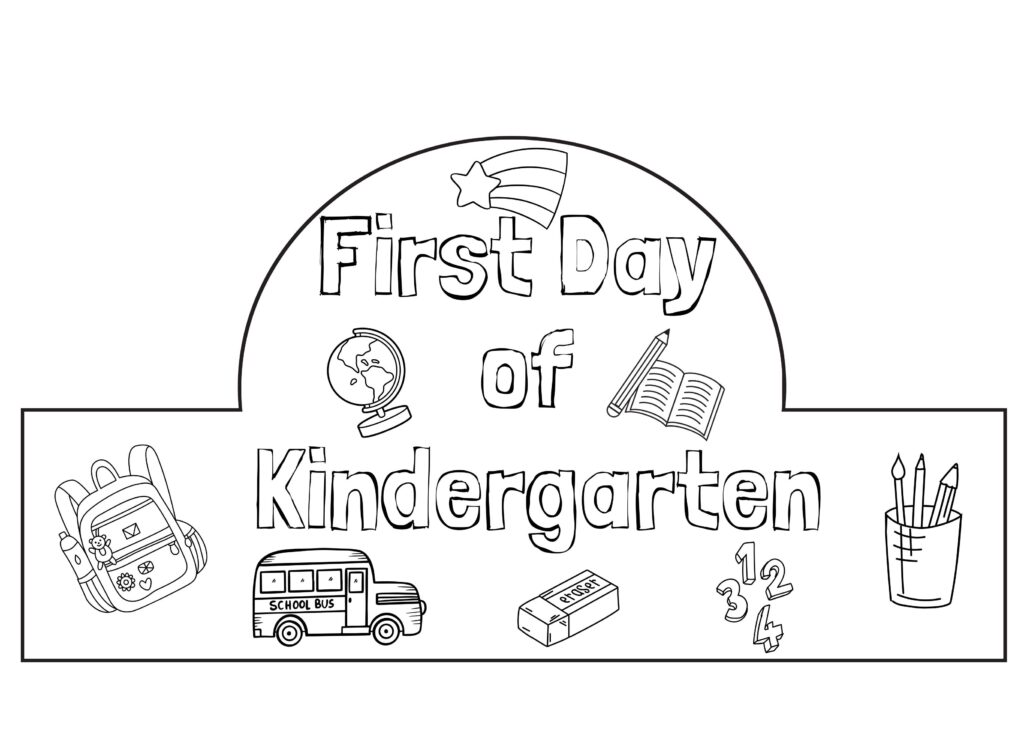
10:20-10:50Crowns- The students will make a crown. Make sure you have a staple around to staple the crowns once they are done. TAKE A FIRST DAY OF SCHOOL CLASS PICTURE 🙂 You can later use it for Open House or yearbook. -materials neededSentence stripsCrown copy Crayons    
11:00-11:30Lunch Take lunch container for kids that bring lunches from home (remind them to place their lunch box inside after they finish eating)Remind the kids to say Please and thank you to Ms. LupeYou can drop off the kids and go have lunch 
11:30-12:30 


12:30
Read a book – The kissing hand 
Play a song or Go Noodle for movement (CD)
*The kissing hand activity- The kids will make draw and color their face and circle how they feel about their first day.
End the day by talking about their feelings, how do they feel about their first day of school (Show feelings poster).Kids can show their self portrait  -Clean up, pick up their belongings
12:45 Dismissal – Walk students back to the area where they were picked up. 

Get the Kindergarten First Day of School Schedule & Activities – No-Prep, Editable Plan here: https://www.teacherspayteachers.com/Product/Kindergarten-First-Day-of-School-Schedule-Activities-No-Prep-Editable-Plan-14108609

Mindfulness in the Classroom: Helping Kids Breathe Again

0
Mindfulness in the Classroom

Have you ever had a moment where you just stop and think, “I can’t do this right now”? I’ve had those moments…in the middle of a lesson, while kids are talking over each other, and my patience is hanging by a thread. That’s when I knew something had to give—and that’s when I discovered the power of Mindfulness in the Classroom.

During COVID and the year after, everything changed. Kids came back different. Many of them were dysregulated due to being away from routines, structure, and each other. We lost a lot of human connection during the lockdowns.

I had a student that would go into full meltdowns over tasks that I assigned him. The tasks would range between writing a few words down or solve one or two math problems, it was too much for him; he’d start crying, yelling, or completely shut down. And honestly, I did not know how to help him.

That’s when I started learning about mindfulness. I reached out to other teachers. A few veteran teachers told me, “Start small just breathe with your students, give them brain breaks, they can’t handle a large workload right away”

So that’s what I did.

At first, I wasn’t sure it would work, I started introducing short breathing exercises. I would say, “Let’s take a brain break. Everyone breathe in through your nose, and out through your mouth.” I I would model it. I’d do it with them.

What Is Mindfulness?

Mindfulness is the paying of attention to the present moment, on purpose, and without any judgment.

Mindfulness helps students become aware of what’s going on in the moment, how they’re feeling, what they’re noticing around them, and how their body feelswithout rushing to react.

According to Merriam-Webster, mindfulness is “the practice of maintaining a nonjudgmental state of heightened or complete awareness of one’s thoughts, emotions, or experiences on a moment-to-moment basis.”
(Source: Merriam-Webster Dictionary)

I often guide my students by saying:
“Close your eyes, take a deep breath, and just notice what you hear, feel, or think.”
That’s it. It’s that simple, and it works.

What Mindfulness Looks Like in My Classroom

I started small. I introduced short, 5-minute breathing breaks throughout the day. After recess, instead of jumping straight into a lesson, we paused. I had students sit quietly, breathe in slowly through their noses, and exhale through their mouths. I’d say:

“Let’s focus on your breath. In… and out… You are here. You are safe.”

Eventually, I added positive affirmations. These have been a game-changer. I guide students to say things like:

  • “I am strong.”
  • “I can do hard things.”
  • “I am calm and ready to learn.”
  • “I am loved.”
  • I am a reader.”

These moments help my students start to believe in who they’re becoming, rather than carry the negativity they’ve heard or felt in the past.

One of my fourth-graders told me, “Ms. Cheban, I feel so much better saying these affirmations. I believe that I am a reader.” This student struggled significantly with reading in my class, primarily because they lacked confidence in their reading abilities. They needed to believe that they could do it, and that had a lot to do with the words they were saying to themselves. Words have power.

Even Kindergartners Can Do It

I teach Kindergarten, and I can say with confidence: even our youngest learners benefit from mindfulness. In fact, they crave it. This generation is growing up in a fast-paced, noisy, overstimulating world. Mindfulness gives them a moment to just be still.

Breathing exercises not only support mental health, but they also help biologically—they lower heart rate, regulate the nervous system, and reduce stress hormones like cortisol PMC. Even a few breaths can shift students from fidgety to focused.

It’s not just my observations; these are studies that show concrete benefits:

  • Classroom-based mindfulness programs improve emotional regulation, attention control, and stress resilience in kids as young as 6–10 years old MDPI.
  • Neuroimaging research links mindfulness to stronger development in brain areas like the prefrontal cortex (for attention control) and a calmer amygdala (for emotional reactivity), verywellmind.com+15en.wikipedia.org+15heraldsun.com.au+15.

Tips for Getting Started with Mindfulness in the Classroom

If you’re curious about trying mindfulness with your students, here are a few easy ways to start:

  • Begin with just one minute of focused breathing each day.
  • Use soft music or nature sounds to help set the tone.
  • Try a script: “Breathe in… feel your belly rise… breathe out… feel your body soften.”
  • Model it yourself! Your calm energy sets the tone.
  • Kids will giggle or resist at first, as it’s new to them. Stay consistent.

Why It Matters

Mindfulness has transformed my classroom. My students are learning how to check in with themselves instead of acting out. They’re starting to recognize their feelings, regulate their responses, and build inner calm. They feel seen and heard, not just academically, but emotionally as well.

And it’s changed me, too. I’m more patient. I pause more. I don’t just react, I respond. We all breathe a little deeper now.

One morning, everything felt a little off. The kids were loud, emotions were high, and I could feel the energy growing tense. I had two students arguing over markers, one was about to cry because someone broke their Lego tower, and I had another one yelling and calling each other names. I could feel myself starting to tighten up. It would’ve been easy to raise my voice or say, “EVERYONE SIT DOWN, LISTEN!” I knew that wasn’t going to help anyone, and especially not me.

Instead, I stopped what I was doing and said, “Watch me.”

I stood still, closed my eyes, and took a deep breath in through my nose… then slowly out through my mouth. I let them see it. I did it again, slower this time. And slowly, one by one, they followed. The noise lowered, their eyes came back to me, and the classroom started to settle. It took a bit of time; however, they knew I was not going to stop until all of them gave me their attention.

Then I turned to one of my students who was still visibly upset. I asked, “Do you want to go to the Peace Corner for a minute?” He nodded and quietly walked over. This space is there for exactly this: a place to breathe, reflect, and maybe use a calm-down tool or the emotion chart. It’s not a timeout corner (which is what I clarify in the beginning of the year to the parents during orientation or back to school night). After a few minutes, he came back and whispered, “I feel better.”

Moments like this remind me that students don’t always know how to regulate on their own, and honestly, sometimes I don’t either. But when I show them what it looks like to pause and breathe, they learn that they can do it too. Modeling calm is powerful. And having a Peace Corner just gives them another safe place to practice it.

What tools do I use?

  • Apps: Smiling Mind, Insight Timer Kids, Calm for Schools
  • Books: Breathe Like a Bear by Kira Willey, Mindful Classrooms by Lauren Rubenstein, Breathing is My Superpower by Alicia Ortego, What Does It Mean to Be Present? by Rana DiOrio
  • YouTube: GoNoodle Flow, Cosmic Kids Zen Den, The Mindfulness Teacher

I encourage students to use the skills that they learn at school when they are feeling overwhelmed. I later had a parent talk to me during Parent-Teacher conferences about how her daughter was able to calm down using her breathing. The parent was so excited to see their daughter be able to use skills that they’ve learned and applied to their real-world experiences. 

A Final Thought on Mindfulness in the Classroom

You don’t need to be an expert to lead mindfulness. You need to show up, breathe, and be present with your students. One mindful moment can change the tone of the entire day or at least help you with the rest of the day.

Honestly, it’s not always perfect. Some days you might forget. I have forgotten sometimes or we just didn’t have enough time. Also, there are days that mindfulness feels rushed or the class is extra wiggly. However, we still do it. We show up for those moments because they matter, little by little, those moments start to shape the culture of the classroom. Soon enough the kids will start asking,
“Could we do mindfulness?”
“Can I go to the Peace Corner?”
“Can we do affirmations before we start?”
“I need a brain break.”

That’s when I know it’s working not because everything is suddenly peaceful and calm but because they’re learning to check-in with themselves. They’re learning their tools of self regulation. They are also learning that they don’t need to explode or shut down when tasks are too hard. They can pause and they could breathe.

And honestly? So can I. Take a breath! You are doing better than you think!

Modern Preschool Classroom: Play-Based and Developmentally Appropriate Practices

0
Preschool Classroom

Introduction

What Is a Modern Preschool Classroom?

A modern preschool classroom means different things to different people. To me, it’s a space where children have everything they need to grow, learn, and explore. It’s a safe, inclusive, and welcoming place that responds to each child’s unique needs.

Why Is Play-Based Learning Important in Early Childhood Education?

Play-based learning is key in early education. It gives children a strong foundation to explore and learn from the world around them. Through hands-on play, they gain a better understanding of how things work. They also learn social skills, like reading facial expressions and sharing. At the same time, they start learning basics like letters and numbers.

What Are Developmentally Appropriate Practices (DAP), and How Do They Shape Preschool Environments?

Developmentally appropriate practices are teaching methods that match a child’s age, abilities, and background. These methods help children grow by offering the right kind of support at the right time.

Environment & Setup

How Is the Classroom Physically Arranged to Support Play-Based Learning?

The classroom setup supports learning through play. It includes special areas—called learning centers—that encourage children to move, make choices, and work with others.

What Types of Learning Centers Are Included?

These centers include dramatic play, sensory bins, building blocks, art supplies, reading corners, peace corners, and loose parts. Each center helps children develop different skills.

How Is the Classroom Designed to Be Inclusive and Culturally Responsive?

The classroom shows respect for different cultures, languages, and abilities. Children see themselves and others reflected in the books, toys, and decorations. As a result, they feel valued and included.

Curriculum & Instruction

How Does the Teacher Integrate Learning Goals Into Play Experiences?

Teachers plan activities that support learning through play. For example, when I place marbles in the loose parts area, I also add number cards to introduce counting. This way, children learn math while playing.

In What Ways Are Children Given Choices and Encouraged to Explore?

Children can choose from many different activities during the day. This builds confidence and keeps them engaged. When children explore what interests them, they feel more connected to learning.

How Is Inquiry and Curiosity Fostered Through Play?

Teachers help children become curious by asking open-ended questions like, “What do you think will happen if we do this?” or “How can we make it stronger?” These questions lead to thinking, guessing, and testing—skills that build problem-solving and creativity.

Role of the Teacher

What Is the Teacher’s Role in a Play-Based Classroom?

In a play-based classroom, the teacher plays many roles. They guide, support, and observe. Instead of giving answers, they ask questions that spark deeper thinking. By watching children play, teachers learn what each child needs next. This helps them plan better lessons.

How Do Teachers Scaffold Learning While Allowing for Independence?

Teachers give just the right amount of help—enough to support learning but not too much to take over. This is called scaffolding, and it matches a child’s Zone of Proximal Development (ZPD)—the space between what they can do alone and what they can do with support.

How Do Teachers Observe and Assess Learning in a Developmentally Appropriate Way?

Teachers use real-life moments to understand how a child is growing. Instead of giving tests, they watch, listen, and take notes during play. These notes help them make learning plans for each child.

Social-Emotional Development

How Does Play Support Social-Emotional Growth?

Play helps children learn how to express emotions, understand others, and bounce back from challenges. It can even help them heal from tough experiences. For example, after the Tubbs Fire in Santa Rosa, children at the Children’s Museum used pretend play to act out firefighting and cope with trauma.
Source

Play also helps children prepare for scary things like surgery or dentist visits. By pretending, they work through fears in a safe, comforting way.
Real article

How Are Peer Interactions and Cooperation Encouraged?

Teachers create chances for children to play together. They may group children in small teams or plan shared activities. These moments teach cooperation, listening, and teamwork.

How Are Conflicts and Problem-Solving Approached?

Teachers model how to talk through problems. They help children use calm words and take turns. Role-playing and “I feel” statements are common tools for helping kids solve disagreements with kindness.

Family & Community Engagement

How Are Families Included in the Learning Process?

Families are welcome partners in a child’s learning. Teachers share news, invite parents to events, and welcome volunteers. When families take part in regular play—both at home and school—it builds trust and strong connections.

How Does the Modern Preschool Classroom Reflect the Cultures and Values of Its Families?

The classroom includes books, art, music, and toys that reflect the children’s home lives. This shows respect for family traditions and helps children feel proud of who they are.

What Strategies Are Used to Communicate Progress and Activities With Families?

Teachers share progress through photos, journals, newsletters, and meetings. These updates keep families informed and allow them to support learning at home.

Conclusion

What Are the Long-Term Benefits of a Play-Based, Developmentally Appropriate Preschool Experience?

Play-based and developmentally appropriate classrooms give children a strong start. They learn how to think, feel, and grow in a balanced way. These early years build confidence, curiosity, and lifelong learning habits.

How Does This Approach Prepare Children for Kindergarten and Beyond?

Children leave preschool ready for Kindergarten with solid social, emotional, and learning skills. While academics are important, skills like working with others, sharing, and managing emotions are just as valuable. These tools set the stage for long-term success in school and life.

Learning Beyond the Classroom Walls: Why Outdoor Education Matters in Kindergarten

0
Outdoor Education

Introduction: The Power of Learning Outside

In my experience as a Kindergarten teacher, I’ve seen firsthand the value of outdoor learning. Nature naturally invites curiosity—when a student asks, “What do ladybugs do?” or “Why are there so many leaves on the ground?” those are not just cute questions—they’re the beginning of real, meaningful learning. Children are born explorers, full of wonder, and as educators, it’s our job to nurture that curiosity and empower them to take learning into their own hands.

Outdoor learning isn’t just fun—it’s grounded in brain and developmental science. Being outside engages children’s senses, boosts memory, reduces stress, and makes learning more meaningful and memorable. It’s a dynamic, open-ended environment where kids thrive.

For me, bringing outdoor activities into our daily routine was inspired by a love for STEM and a desire to help students experience the world beyond worksheets. The outdoors encourages children to learn more, do more, and be more.

I believe learning doesn’t only happen inside four walls. In fact, some of the most memorable and impactful moments happen when children are allowed to explore freely, ask big questions, and connect with the world around them in real time. There’s something powerful about seeing students light up when they notice a bug under a rock or ask, “Can I write about what I found?”

Activity 1: Nature Scavenger Hunt

One of my favorite ways to explore science and observation skills with my students is through nature scavenger hunts. Equipped with clipboards, checklists, pencils, science notebooks, and magnifying glasses, my Kinders set out to discover items like “a leaf bigger than your hand,” “a flower,” “a rock with spots,” or “something round.” These hunts vary depending on the season and environment—whether we’re in the school garden or the playground.

Students love these hunts, and I love observing them in action. I learn who prefers teamwork and who enjoys working independently, who takes the lead, and who observes quietly. Academically, this simple activity hits many standards—science through observation, vocabulary building, math through comparison, and even writing when they record or illustrate their findings.

Activity 2: Sidewalk Chalk Games

Chalk is one of my go-to tools for outdoor learning. It’s simple, inexpensive, and opens the door for literacy, math, and creativity. We use chalk for number recognition, counting, shape games, and one of my personal favorites—Hopscotch Spelling.

Instead of numbers, we write letters or whole sight words in each square. As students hop through, they spell aloud—saying each letter as they land on it. Longer words stretch across multiple boards. This game supports letter-sound correspondence, builds confidence, and gets kids moving. It’s especially helpful for kinesthetic learners, and those with ADHD or autism who benefit from physical movement while learning.

One memorable moment was with Mia, a quiet student who rarely spoke in group settings. During Hopscotch Spelling, she suddenly called out each letter of the word “like” with confidence and pride. The whole class cheered, and it was one of those beautiful reminders that learning through play creates opportunities for children to find their voice.

Activity 3: Garden Time

We’re lucky to have a beautiful school garden with raised beds and planters filled with tomatoes, peppers, herbs, flowers, and even a lemon tree. My students planted tomatoes and peppers from seed—starting in cups, then transferring them to larger pots, and finally planting them outdoors.

Through gardening, students learned about plant needs, the role of wind, pest control with basil, and the importance of ladybugs. It was more than a science lesson—it became a study in responsibility, observation, and care. When children plant something with their own hands, they develop ownership and empathy. They also become more curious about the creatures and ecosystems around the garden, which leads to rich, spontaneous learning moments.

One of my students once said, “My plant is growing because I take care of it every day!” That simple statement showed me how deeply connected they had become to the process and the pride they took in their work.

Activity 4: Outdoor Storytime

When the weather allows, we take our read-alouds outdoors. My favorite setup is on a picnic blanket—sometimes the kids bring their own from home. Reading outside transforms a regular storytime into something magical. They’re more engaged, more attentive, and often make real-time connections to what they’re hearing.

Books about weather, animals, or plants are perfect for this setting. One student once interrupted to say, “Hey! That’s just like the flower we saw this morning!”—and that moment of recognition sparked a whole conversation about pollination. These kinds of intrinsic learning moments are what make outdoor learning so powerful.

Activity 5: Outdoor Centers & Free Play

Free play outside is just as important as structured learning. I set up various outdoor centers like sensory bins with water or sand, large building blocks, art stations, and open-ended play areas. These moments support all domains of development, especially social-emotional and cognitive growth.

During this time, I step back and observe—but I also engage with students by asking open-ended questions like, “What are you building?” or “Why did you choose that material?” It’s in these moments that I see creativity, collaboration, and problem-solving come to life.

Activity 6: Movement & Mindfulness

Movement is a daily necessity for young learners. I lead stretching sessions outside and occasionally practice mindful breathing or quiet listening exercises in nature. While mindfulness indoors can feel a little forced for young children, doing it outdoors sparks curiosity and calm.

Some of our favorite mindfulness activities include “bubble breaths” (deep breaths where we imagine blowing bubbles into the sky) and sound walks, where students close their eyes and try to name five different things they hear. These simple routines are calming, grounding, and help students refocus after high-energy play.

Being consistent with these routines helps students learn how to regulate themselves and transition more smoothly throughout the day. When kids are given space to move, breathe, and connect with nature, behavior and focus naturally improve.

Why It Matters

Outdoor learning is more than just a change of scenery—it’s an essential part of development. It supports emotional regulation, cognitive growth, motor skills, and builds meaningful, lasting connections between what students learn and the world around them.

I’ve seen students thrive socially, emotionally, and academically when given more opportunities to learn outside. It’s made me a more observant, creative, and responsive teacher. The outdoors has become one of my greatest teaching tools.

Encouragement for Educators and Parents

If you’re a teacher or parent feeling unsure about bringing learning outside, my advice is: start small. One chalk game, one story under a tree, one scavenger hunt. You don’t need a fancy garden or perfect weather. You just need curiosity, consistency, and a willingness to step outside.

Outdoor learning invites children to be active participants in their education—and that’s where the magic happens.

Outdoor Classroom Activities for Kindergarten

0
Outdoor Classroom Activities

Introduction

Outdoor classroom activities transform the way young children learn. Instead of being confined to four walls, Kindergarten students engage their senses, spark their curiosity, and develop critical thinking skills in a natural, open-air setting.
When children are outside, they ask questions like “What do ladybugs do?” or “Why are rocks different colors?” — opening doors to meaningful learning.

As an educator, my mission is to foster this sense of wonder, giving students opportunities to take ownership of their learning through hands-on outdoor experiences.

Why Outdoor Classroom Activities Matter in Early Education

Outdoor learning is more than just a fun break—it’s backed by research.
Studies show that outdoor activities:

  • Boost memory and focus
  • Lower stress levels
  • Strengthen motor skills
  • Increase student engagement and collaboration

Outdoor classroom activities allow students to move, observe, question, and create—all essential foundations for lifelong learning.

Inspiring Outdoor Classroom Activities for Kindergarten

1. Nature Scavenger Hunts

One of the easiest and most exciting outdoor classroom activities is a nature scavenger hunt.
Materials needed:

  • Science notebook or clipboard
  • Pencil
  • Checklist
  • Magnifying glass

Students search for items such as:

  • A leaf bigger than their hand
  • A flower
  • A rock with spots
  • Something round
  • Something that moves

Academic Skills Developed:

  • Science: Observation skills
  • Math: Measuring items
  • Vocabulary: Describing and categorizing findings

Bonus Tip: Early in the year, scavenger hunts help assess teamwork skills and social dynamics.

2. Sidewalk Chalk Learning Games

Sidewalk chalk turns ordinary lessons into dynamic outdoor classroom activities.
Ways to use chalk:

  • Draw numbers for number recognition and counting
  • Create hopscotch boards with sight words or math equations
  • Set up skip-counting challenges (by 2s, 5s, 10s)

Favorite Activity:
Hopscotch Spelling — Students hop across letters to spell words out loud, reinforcing spelling, letter-sound correspondence, and movement skills.

Student Benefits:

  • Supports kinesthetic learners
  • Helps students with ADHD and autism by incorporating needed movement
  • Builds confidence in a joyful, active way

3. Gardening Adventures

Gardening is one of the most enriching outdoor classroom activities.
At our school garden, students plant seeds like tomatoes and peppers, observe their growth, and learn about plant life cycles.

Academic Connections:

  • Science: Plant needs, pest control (e.g., ladybugs)
  • Literacy: Writing about garden observations
  • Math: Measuring plant growth

Character Development:
Gardening teaches responsibility, patience, and respect for nature.

4. Outdoor Storytime

Outdoor storytime combines literacy with the magic of the natural world.
Setup:
Students sit on picnic blankets under the sun while I read books about nature, weather, or animals.

Benefits:

  • Higher student engagement
  • Natural connections between stories and surroundings
  • Encourages intrinsic motivation to learn

Favorite Moment:
Watching a child connect a story about butterflies to real ones fluttering nearby was a priceless teaching memory.

5. Outdoor Centers and Free Play

Structured centers outside provide students with a variety of learning experiences.
Outdoor centers might include:

  • Sensory bins (water, sand)
  • Large building blocks
  • Art stations
  • Water play areas

Skills Developed:

  • Social-emotional growth
  • Problem-solving
  • Creativity

During free play, I observe collaboration, creativity, and emerging leadership skills as students build, imagine, and create together.

6. Movement and Mindfulness Activities

Movement and mindfulness are essential components of outdoor classroom activities.
Common routines:

  • Stretching exercises
  • Breathing practices
  • Sound-listening activities

Student Benefits:

  • Improved self-regulation
  • Better transitions between activities
  • Enhanced focus and behavior throughout the day

Children are naturally more engaged in mindfulness outdoors, making it easier for them to relax, reset, and refocus.

Why Outdoor Classroom Activities Transform Learning

Outdoor classroom activities meet students’ developmental needs in ways traditional classrooms sometimes cannot.
They strengthen:

  • Emotional development
  • Cognitive skills
  • Gross motor coordination
  • Environmental awareness

Students who regularly participate in outdoor learning demonstrate better academic performance, deeper social connections, and greater emotional resilience.

Closing Thoughts: Encouraging Outdoor Learning

If you’re hesitant about outdoor classroom activities, remember—you don’t have to be an expert naturalist to start.
Simple steps to begin:

  • Use a checklist for scavenger hunts
  • Bring a favorite book outside
  • Set up a basic sensory station
  • Incorporate chalk games for math or spelling practice

Final Tip:
Let your students’ curiosity lead the way. Start with one small outdoor activity and watch how it transforms your classroom culture.

Helpful Resources to Get Started:

  • Printable scavenger hunt sheets
  • Outdoor storytime book lists
  • Garden starter guides for young learners

Outdoor classroom activities open a world of wonder, creativity, and growth for every Kindergarten student. Let’s take learning outside!

Modern Preschool Classroom

0
Modern Preschool Classroom

A modern preschool classroom is much more than a bright room filled with toys and miniature furniture. It is a thoughtfully arranged space where young children feel secure, valued, and inspired to learn. In this environment, children grow through hands-on experiences that cater to their developmental needs—cognitive, emotional, social, and physical.

What truly defines a modern classroom is its responsiveness. It is inclusive of all children’s backgrounds, cultures, and learning styles. Whether a child is shy, active, multilingual, or neurodivergent, the classroom is designed to meet them where they are and help them thrive.

Why Play-Based Learning Matters in Early Childhood Education

One of the defining features of a modern preschool is the use of play-based learning. This approach isn’t just fun—it’s foundational. Play gives children the opportunity to explore, experiment, and understand the world around them. Through imaginative games, role-play, building blocks, and art, children learn essential skills without the pressure of formal instruction.

For example, when children pretend to run a grocery store, they are learning math (through counting money), language (through conversation), and social skills (through turn-taking and cooperation). These meaningful, hands-on experiences help build confidence, independence, and curiosity.

Play also helps children understand rules, emotions, and cause-and-effect relationships. It supports a love for learning that goes beyond memorization.

Developmentally Appropriate Practices (DAP) in Preschool

Developmentally Appropriate Practices (DAP) ensure that every child is met with teaching strategies that fit their individual needs and developmental stage. In a modern preschool classroom, educators consider a child’s age, background, abilities, and interests when planning lessons and activities.

Instead of rigid, one-size-fits-all instruction, teachers use flexible strategies to meet children where they are. For instance, a group of four-year-olds learning about numbers might engage in a counting game with colorful beads, while others explore patterns with blocks or draw shapes in sand.

This personalized approach leads to deeper understanding, increased engagement, and a more joyful learning experience.

Environment & Setup: Designing the Classroom for Success

Intentional Arrangement for Play and Learning

The way a preschool classroom is set up plays a big role in how children interact with it. A modern setup includes clearly defined areas, or learning centers, where children can move freely, make choices, and engage in a wide range of activities.

Each center encourages collaboration and hands-on discovery. The layout avoids clutter and includes flexible spaces that can be adjusted based on children’s needs and interests.

Common Learning Centers Found in Modern Classrooms

Modern preschool classrooms typically feature:

  • Dramatic Play Area – A space where children can role-play as chefs, doctors, firefighters, and more.
  • Sensory Bins – Tables filled with sand, rice, or water for tactile exploration.
  • Block Area – For building, measuring, balancing, and problem-solving.
  • Art Station – Equipped with paints, markers, paper, and clay to promote creativity.
  • Literacy Corner – A cozy area with books, story props, and letter games.
  • Peace Corner – A calming space where children can relax and self-regulate.
  • Loose Parts Station – Open-ended materials such as marbles, buttons, and sticks that spark imagination.

Each center serves a purpose in supporting different areas of child development—cognitive, motor, language, and emotional.

Designing for Inclusivity and Cultural Responsiveness

Modern preschool classrooms celebrate diversity. The environment reflects the cultures, languages, and experiences of all children and families. Teachers include books featuring diverse characters, posters with multiple languages, and toys representing different abilities and family structures.

When children see themselves and their peers represented in the classroom, they feel a stronger sense of belonging. This also helps children learn empathy, respect, and global awareness.

Curriculum & Instruction: Learning Through Purposeful Play

Embedding Learning in Play

In a play-based classroom, teachers align learning goals with natural play opportunities. For example, if children are building with blocks, a teacher might introduce concepts like counting, comparing sizes, or talking about balance and gravity. When playing with marbles, children might be introduced to colors, patterns, or simple math.

These teaching moments are woven seamlessly into play, making learning feel fun and relevant.

Fostering Independence and Choice

Children thrive when they are allowed to make choices. A modern preschool classroom encourages children to decide what they want to do, whether it’s painting, reading, building, or pretending. This freedom builds independence and confidence.

When children are engaged in activities they’ve chosen themselves, they are more likely to focus, take initiative, and feel pride in their work.

Sparking Inquiry and Curiosity

Curiosity is the starting point of learning. Teachers in modern preschool classrooms nurture curiosity by:

  • Offering open-ended materials such as clay, water, or natural items.
  • Asking open-ended questions like “What do you think will happen if…?”
  • Setting up provocations (e.g., placing seashells next to ocean books) to spark interest.
  • Encouraging documentation through drawings, photos, or child-led storytelling.

These strategies invite children to investigate, hypothesize, and make discoveries.

Role of the Teacher: The Guide on the Side

Facilitating, Not Dictating

Teachers in a modern preschool classroom act as facilitators. They observe, interact, and support children as they play and learn. Instead of leading every activity, they guide learning by asking questions, offering materials, and stepping in when support is needed.

Observing for Authentic Assessment

Rather than relying on tests or worksheets, teachers use authentic assessment—observing children in action and documenting their growth. Notes, photos, and samples of work are used to understand a child’s strengths and needs.

This method aligns with frameworks like Teaching Strategies GOLD (TSG), which focuses on real-world evidence of learning.

Supporting Through Scaffolding and ZPD

Using Lev Vygotsky’s Zone of Proximal Development (ZPD), teachers scaffold learning. This means giving children the right amount of help to complete a task slightly beyond their current ability. As the child learns, the teacher gradually reduces support.

For example, a child learning to write their name may first trace it, then write it with prompts, and finally write it independently.

Social-Emotional Growth: A Vital Part of Learning

Healing Through Play

Play helps children process emotions, manage stress, and build resilience. After traumatic experiences—such as the Tubbs Fire in Santa Rosa—children used play to recover emotionally. In one case, a five-year-old dressed as a firefighter to process his feelings and fears.

Programs like the Children’s Museum of Sonoma County support trauma-informed play. Role-play, such as visiting a pretend doctor or dentist, helps children prepare for real-life challenges and reduces anxiety.

Building Friendships and Social Skills

Preschool is where many children form their first friendships. Teachers create opportunities for collaboration through group games, projects, and discussions. Children practice turn-taking, active listening, and teamwork.

These social skills become the foundation for future academic and personal success.

Teaching Conflict Resolution

Disagreements are part of growing up. Teachers model and teach conflict resolution by:

  • Role-playing peaceful solutions
  • Creating calm-down areas like the peace corner
  • Encouraging respectful communication
  • Helping children express feelings with “I” statements (e.g., “I feel sad when…”)

This helps children learn empathy, patience, and problem-solving.

Family and Community Engagement

Involving Families as Partners

In a modern preschool, families are not outsiders—they are active partners. Schools encourage participation through:

  • Classroom volunteering
  • Cultural events and family days
  • Play-at-home activities that mirror classroom learning

These practices help families understand what their children are learning and how to support them at home.

Reflecting Family Cultures in the Classroom

Classrooms include:

  • Family photos
  • Cultural artifacts
  • Books and songs in various languages
  • Celebrations of diverse holidays and traditions

This representation helps children feel connected to both their home and school environments.

Effective Communication

Teachers keep families informed with:

  • Weekly newsletters
  • Photos and learning portfolios
  • Parent-teacher conferences
  • Apps or messaging platforms

This regular communication builds trust and keeps families engaged.

Conclusion: The Lasting Impact of a Modern Preschool Classroom

A modern preschool classroom rooted in play-based, developmentally appropriate practices offers lifelong benefits. Children gain not only academic readiness but also emotional strength, social awareness, and a deep love of learning.

Preparing for Kindergarten and Beyond

While letters and numbers are important, it’s the social-emotional and executive functioning skills—like focus, flexibility, and empathy—that truly prepare children for school and life. When children leave a modern preschool, they’re not only ready to read and write—they’re ready to thrive.

Celebrations in Kindergarten: The Magic in the Little Moments

0
Celebrations in Kindergarten

Celebrations in Kindergarten have brought some of my most meaningful teaching moments. I still remember the joy when my students surprised me with handmade cards for my birthday and again on Valentine’s Day. They were so proud of their creations, and I could feel the love in every word and drawing. That moment reminded me exactly why I teach.

One of our most magical days was when we made gingerbread houses. The excitement in the room was contagious—tiny hands decorating with frosting and candy, kids proudly sharing their designs, and later writing all about it in their journals. It wasn’t just a holiday craft—it was a core memory in the making.

Another favorite tradition is the Elf on the Shelf in the classroom. Each morning, students would rush in, scanning every corner to find where our elf had landed. It sparked imagination, laughter, and just the right touch of winter magic. Before introducing the elf, I reached out to families to ensure it was inclusive and appropriate for everyone. That open communication made it even more special.

The Power of Celebration in Kindergarten

In kindergarten, celebration is a way of life. Whether it’s a major event or a small moment of joy, we make space to recognize growth, effort, and connection. For five- and six-year-olds, the little moments often become the big ones.

Everyday Celebrations in the Classroom

Celebrating doesn’t always require balloons or cupcakes. Sometimes, it’s a simple high five after a student writes their name correctly or a cheer when someone reads their first CVC word aloud.

In my classroom, we celebrate the small wins—pushing in a chair, cleaning up without being asked, or inviting a new friend to play. These moments represent growth, kindness, and awareness. Celebrating them helps reinforce the behaviors we want to see more of.

One of our favorite surprises is a visit from the Desk Fairy. She visits when no one’s looking and leaves a tiny note or treat on desks that are neat and organized. The kids light up when they find her magical gifts and often show them off to their friends. It’s a fun, motivating way to encourage responsibility and pride in their learning environment.

Another cherished moment is the 100th Day of School. We dress up like we’re 100 years old, count 100 snacks, build with 100 blocks, and reflect on how far we’ve come. It’s a silly, joyful celebration that highlights growth and achievement.

Seasonal and Cultural Classroom Celebrations

Throughout the school year, we incorporate seasonal and cultural celebrations in kindergarten to bring learning to life and build classroom community. These moments add excitement and structure to the year while fostering deeper connections.

Some Class Favorites Include:

  • Halloween: We dress up, do themed crafts, and turn learning centers into spooky-fun zones. Watching students transform into their favorite characters and parade around is always a highlight.
  • Día de los Muertos: In a previous school, we honored this tradition by decorating sugar skulls, creating an ofrenda, and reading meaningful stories. It became a beautiful way to teach about memory, love, and cultural heritage.
  • Gingerbread Houses: During the winter months, we build gingerbread houses and read cozy, seasonal books. This sensory-rich experience brings out creativity and joy.
  • Valentine’s Day: Students decorate bags, exchange cards, and learn how to express appreciation. It’s the perfect opportunity to discuss kindness and friendship.
  • St. Patrick’s Day: Leprechaun traps, hidden gold coins, and sparkly green footprints lead to laughter and imaginative storytelling.
  • Earth Day: We get our hands dirty in the school garden, planting seeds and learning about nature. It’s a calm, grounding activity that teaches responsibility and care for our planet.
  • Chinese New Year: In our current school, many families celebrate this holiday. We read stories, learn about the zodiac, and make red and gold crafts. It’s a wonderful way for students to share traditions and feel seen.

These celebrations are more than just fun activities—they’re opportunities to connect classroom learning with real-world traditions. They promote inclusion, creativity, and joy.

Partnering With Families to Create Meaningful Celebrations

A big part of successful classroom celebrations is partnering with parents and caregivers. I always aim to communicate early and clearly about upcoming events, especially those involving holidays or cultural traditions.

When we introduced the Elf on the Shelf, I explained the tradition in a lighthearted and respectful way, inviting feedback from families. That small act built trust and ensured everyone felt included.

Parents love being part of the fun. Whether they’re sending supplies, volunteering during Earth Day, or reading stories in class, their involvement enhances the experience. Celebrations become more meaningful when students see their families and teachers working together.

Every Classroom is Unique

One of the most important lessons I’ve learned is that classroom celebrations should reflect the students you serve. No two classes are the same, and celebrations shouldn’t be either.

Some schools may prioritize Lunar New Year, while others might share traditions around Diwali, Hanukkah, Ramadan, or local holidays. When we invite families to share what’s meaningful to them, we create a more inclusive and enriched classroom experience.

Sometimes the celebration is as simple as spotlighting a child’s culture through a book or art project. Other times, it’s making space for a family recipe or letting students teach the class about a special tradition.

Celebrations rooted in identity and connection are the ones students remember for years to come.

Why Celebrations Matter in Early Childhood Education

Why are celebrations so important in early childhood classrooms? Because for young learners, emotion and experience are deeply tied to learning.

Celebrations:

  • Reinforce that learning is joyful and worth celebrating
  • Build a positive classroom culture
  • Boost student confidence and social-emotional development
  • Help teachers pause and connect with their “why”
  • Create lasting memories that students carry forward

Far from being a distraction, celebrations enhance learning by making it meaningful and engaging.

Tips for Teachers: How to Bring Celebration Into Your Classroom

If you’re a new teacher or looking to start celebrating more intentionally in your classroom, here are a few tips:

  • Start small. Notice what your students are proud of and celebrate it.
  • Build routines around effort, kindness, and growth.
  • Ask families what celebrations or traditions are important to them.
  • Let students lead. Their excitement will guide the way.

You don’t have to plan elaborate parties. A sticker chart, themed dress-up day, surprise dance party, or kind note from the Desk Fairy can all make a big impact. These are the moments your students will carry with them—and the ones you’ll cherish too.

Celebrating the Joy of Learning in Kindergarten

In kindergarten, there is always something to celebrate. Whether it’s a major holiday, a cultural tradition, or a quiet act of kindness, each moment is an opportunity to teach students that they matter.

Celebrations help us pause, reflect, and connect. They make our classrooms joyful places of learning, growth, and belonging.