

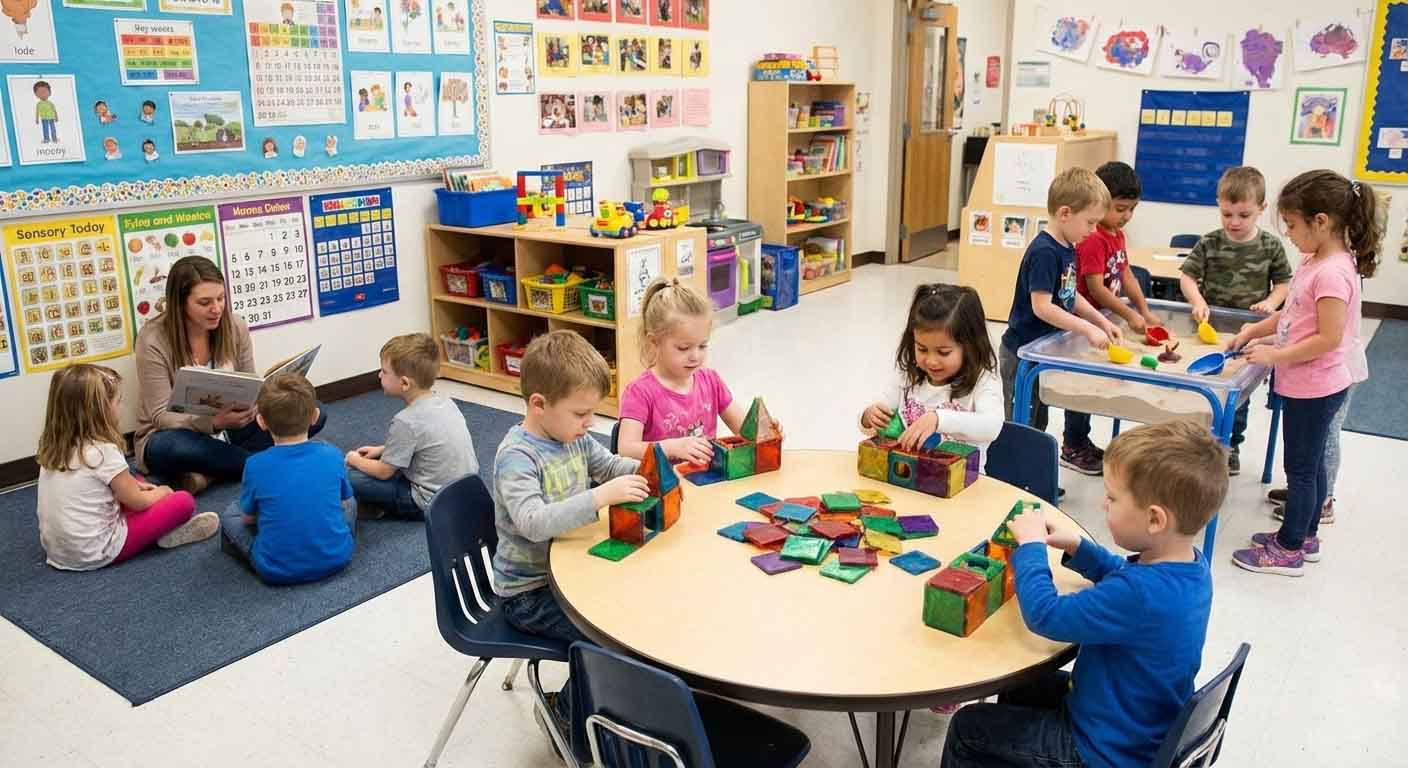
Small group activities for kindergarten are one of the most powerful tools teachers can use to support early learning. When children work in small groups, they receive more attention, feel more confident, and engage more deeply with lessons. These activities help build academic skills, social development, and independence in a way that whole-group instruction often cannot.
In this complete guide, you’ll discover why small group instruction matters, how to plan it successfully, and dozens of practical small group activities for kindergarten that work in real classrooms.
Why Small Group Activities Are Important in Kindergarten
Kindergarten students are at a critical stage of development. They learn best through interaction, play, and guided exploration. Small group learning allows teachers to meet children where they are.
Key benefits of small group activities:
- Individualized instruction
- Better classroom management
- Stronger student engagement
- More opportunities for observation and assessment
- Increased confidence for shy learners
Small group activities also support differentiated instruction, making them ideal for mixed-ability classrooms.
What Is a Small Group in Kindergarten?
A small group typically includes 3–6 students working together on a focused activity. The teacher may lead the group directly or observe while students work independently.
Small groups can be:
- Teacher-led
- Student-led
- Skill-based
- Interest-based
- Ability-based (flexible and rotating)
The key is flexibility. Groups should change often based on student progress and needs.
How to Structure Small Group Time in Kindergarten
Before choosing activities, it’s important to structure your small group time effectively.
1. Set Clear Expectations
Teach students:
- How to move to groups
- How to use materials
- How to work quietly
- How to ask for help
Practice routines early in the year.
2. Use a Rotation Model
Common small group rotation setups include:
- Teacher table
- Independent work station
- Hands-on learning center
- Literacy or math station
Each rotation usually lasts 10–15 minutes, depending on attention span.
3. Keep Materials Simple
Overly complicated materials slow learning. Use:
- Manipulatives
- Picture cards
- Whiteboards
- Simple worksheets
- Everyday classroom items
Literacy Small Group Activities for Kindergarten
Literacy skills develop rapidly in kindergarten. Small groups allow children to practice reading, writing, and phonics at their own pace.
1. Letter Sound Sorting
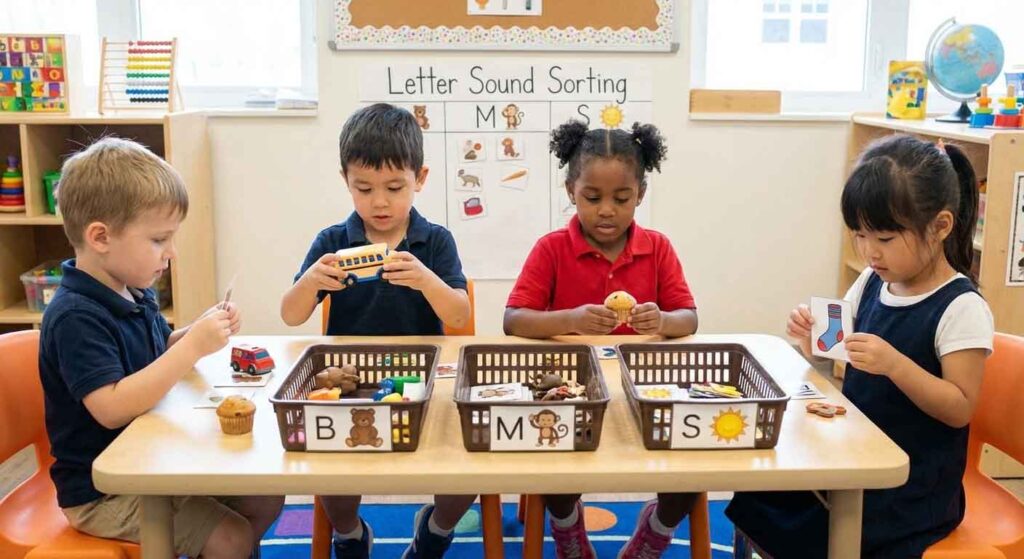
Students sort pictures by beginning sound.
Skills developed:
- Phonemic awareness
- Letter-sound correspondence
Materials:
- Picture cards
- Letter cards
- Sorting mats
2. Guided Reading Groups
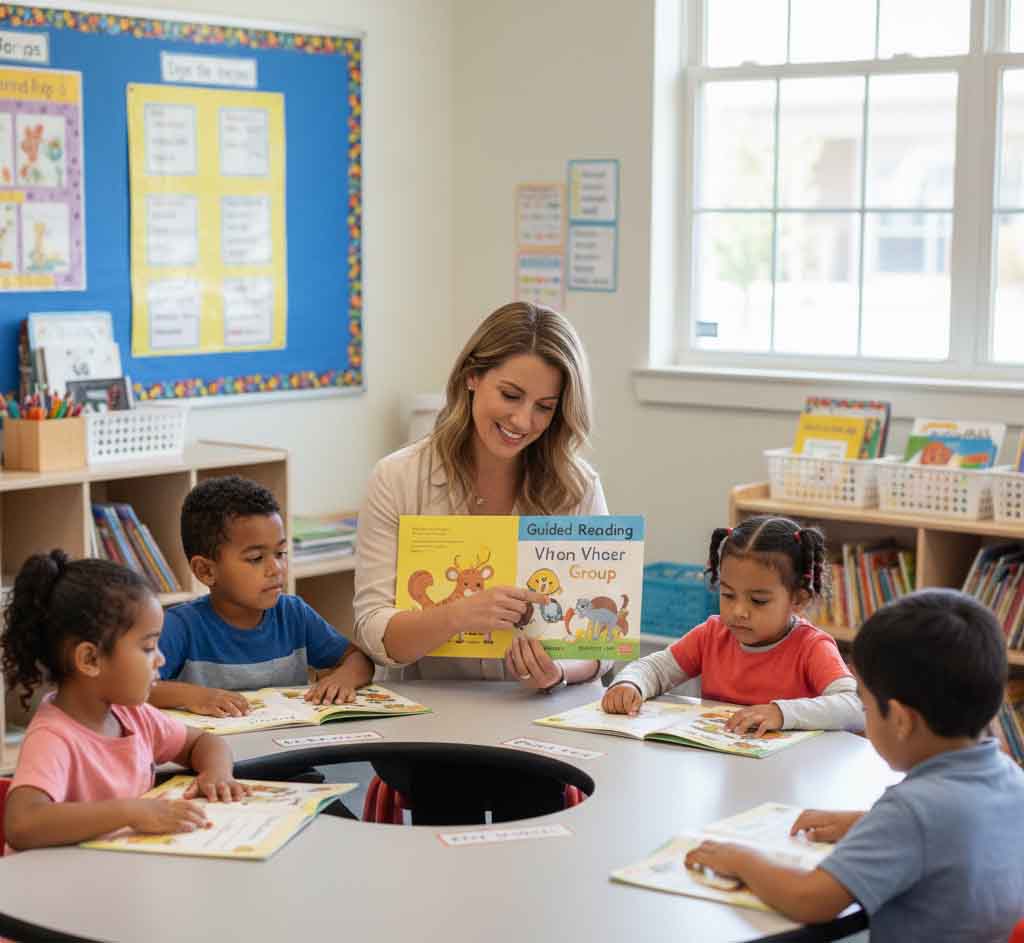
Read simple books together while focusing on:
- Sight words
- Decoding strategies
- Comprehension
Ask open-ended questions and encourage predictions.
3. Sight Word Games
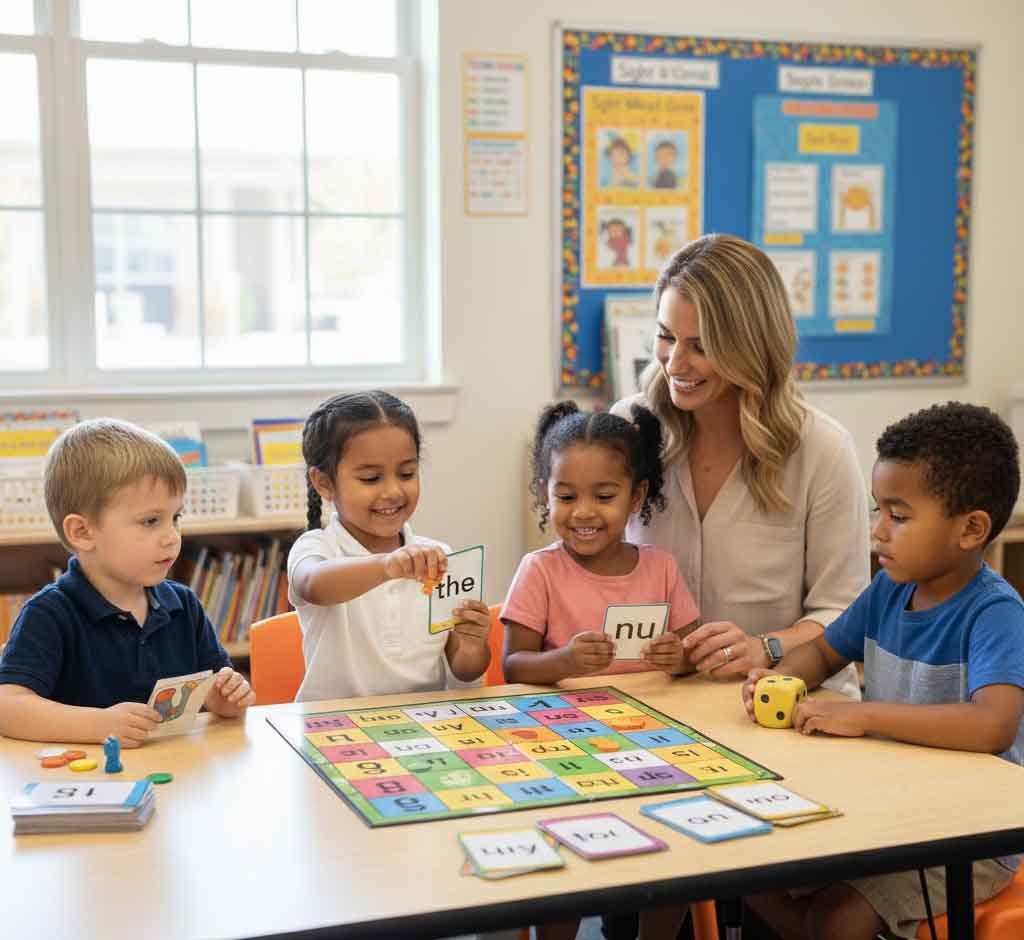
Use games such as:
- Sight word bingo
- Word matching
- Build-a-word with letter tiles
Games reduce pressure and increase motivation.
4. Sentence Building
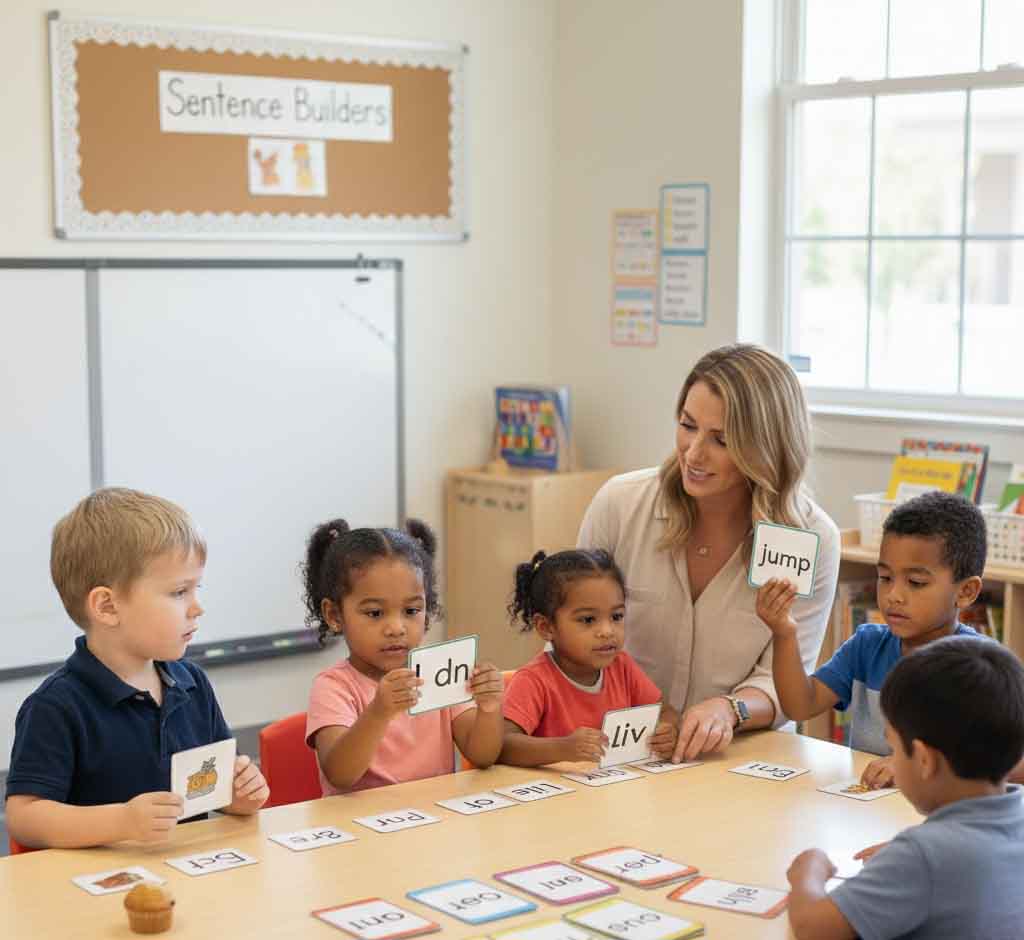
Provide word cards and have students build simple sentences.
Example:
I see a cat.
This builds:
- Sentence structure
- Confidence in writing
- Understanding of word order
Math Small Group Activities for Kindergarten
Math small group activities help children develop number sense through hands-on learning.
5. Counting with Manipulatives
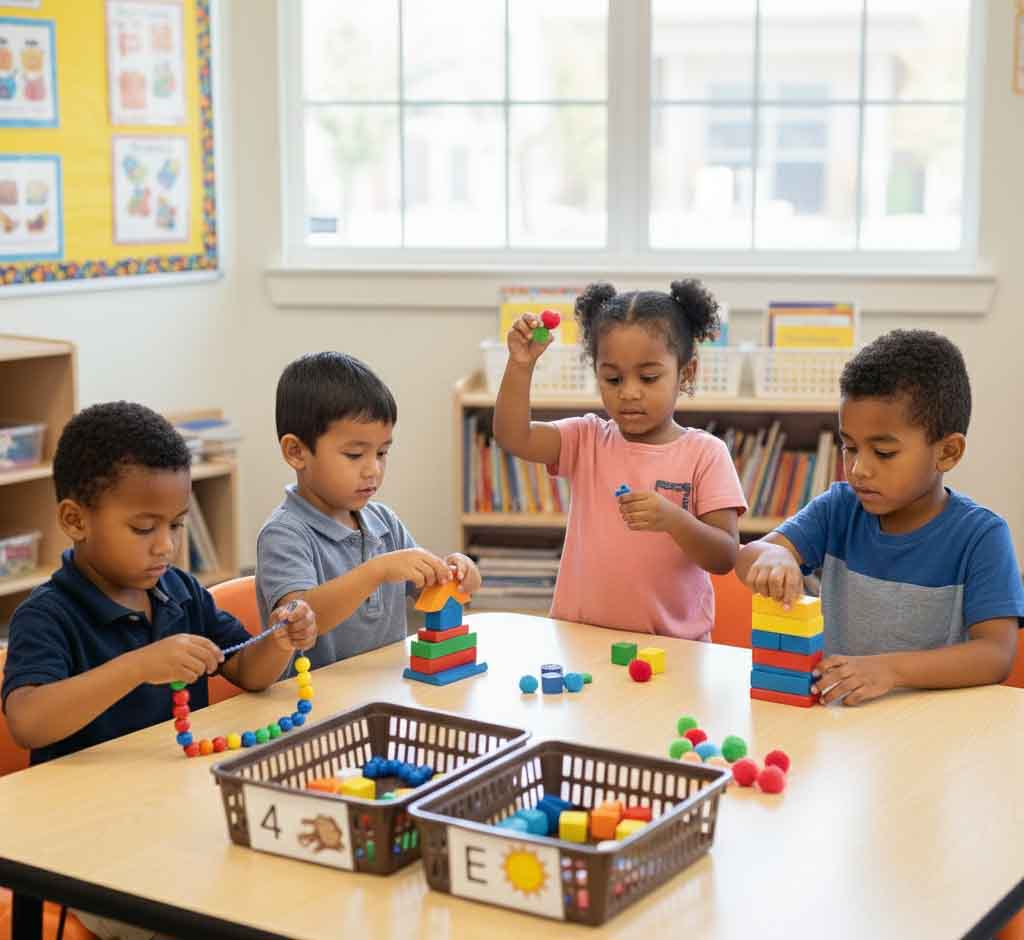
Students count objects such as:
- Cubes
- Buttons
- Bears
- Beans
Have them:
- Count aloud
- Match numbers to quantities
- Compare amounts
6. Number Matching
Match numerals to:
- Dot cards
- Ten frames
- Quantity pictures
This reinforces number recognition and understanding.
7. Simple Addition Games
Use objects to solve basic problems.
Example:
2 blocks + 1 block = ?
Hands-on math makes abstract ideas concrete.
8. Shape Exploration
Provide shapes and challenge students to:
- Sort by size
- Sort by shape
- Build pictures using shapes
This supports geometry and spatial awareness.
Fine Motor Small Group Activities for Kindergarten
Strong fine motor skills are essential for writing and independence.
9. Playdough Letters
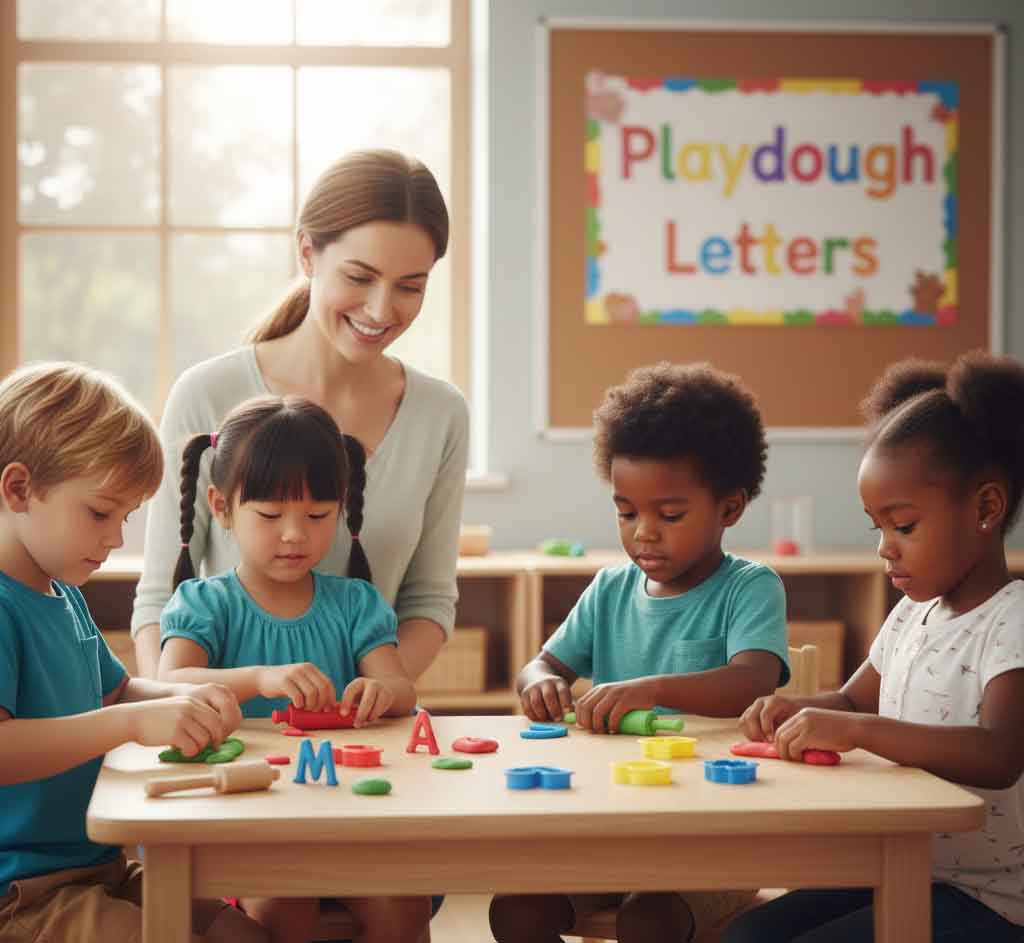
Students form:
- Letters
- Numbers
- Shapes
This strengthens hand muscles while reinforcing academic skills.
10. Cutting Practice
Offer cutting strips with:
- Straight lines
- Curves
- Zigzags
Cutting builds hand-eye coordination and control.
11. Beading Patterns
Children create patterns using beads or pasta.
Skills developed:
- Pattern recognition
- Fine motor control
- Focus and patience
Social and Emotional Learning Small Group Activities
Small groups are perfect for teaching social skills in a safe, supportive environment.
12. Turn-Taking Games
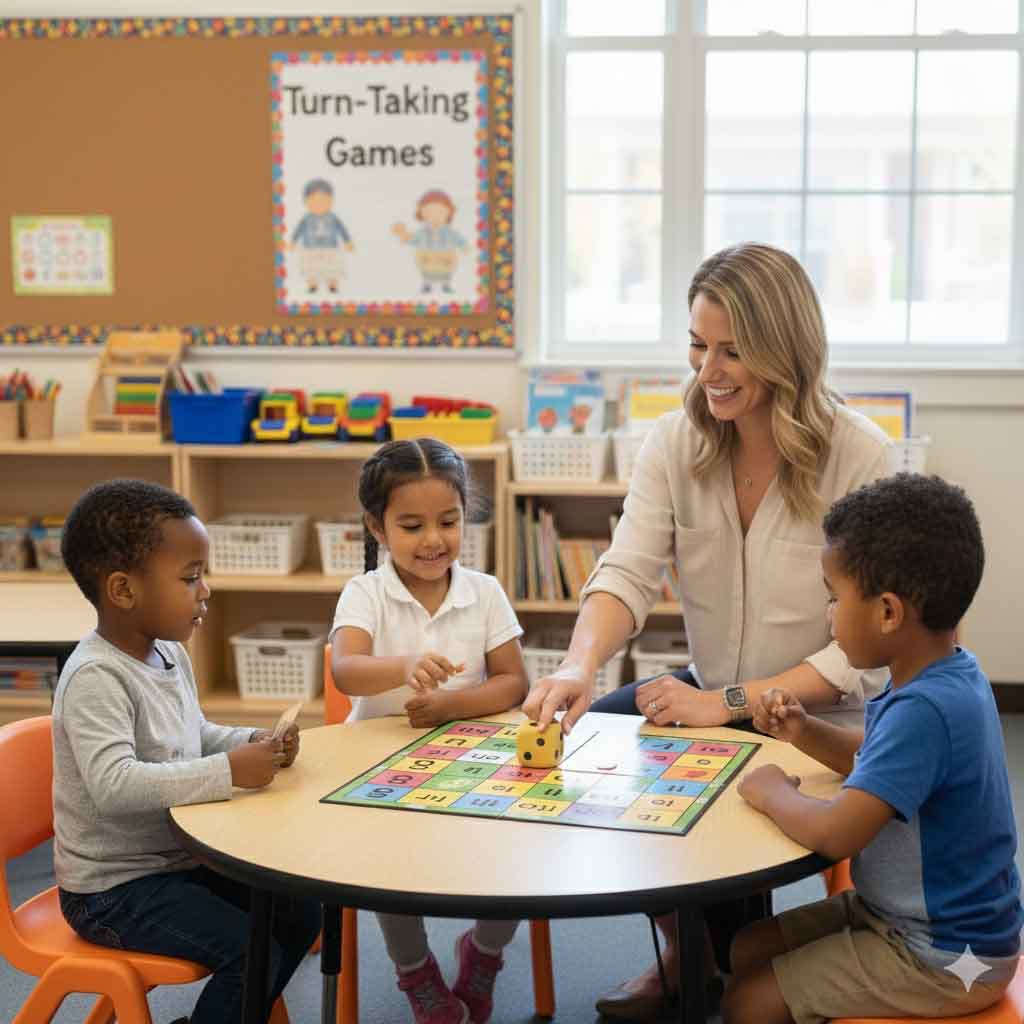
Play simple board or card games that require waiting and sharing.
Students practice:
- Patience
- Cooperation
- Emotional regulation
13. Emotion Sorting
Use picture cards showing emotions.
Ask students to:
- Name emotions
- Share when they felt that way
- Role-play responses
This builds emotional awareness and empathy.
14. Problem-Solving Scenarios
Present simple situations:
“What can you do if two people want the same toy?”
Encourage discussion and solutions.
STEM Small Group Activities for Kindergarten
STEM activities encourage curiosity and critical thinking.
15. Building Challenges
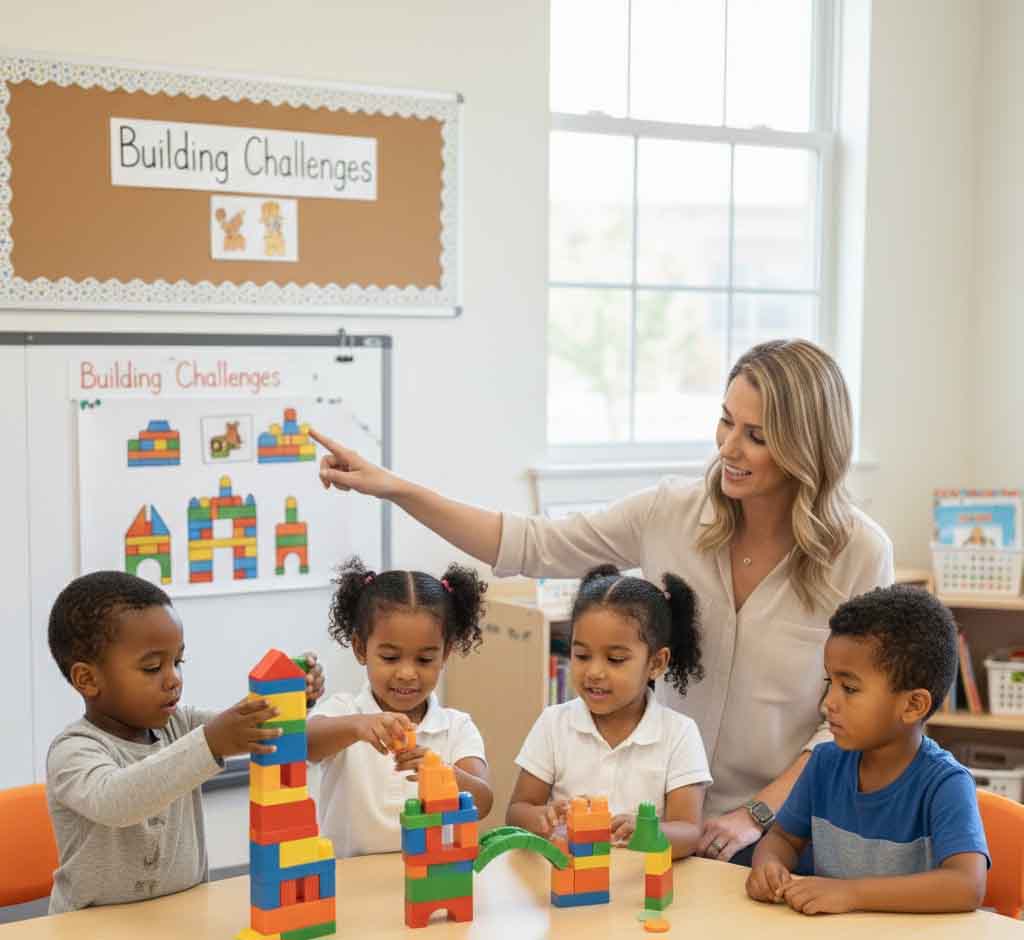
Give students materials such as:
- Blocks
- Cups
- Paper tubes
Challenge them to:
- Build the tallest tower
- Create a bridge
- Design a house
16. Sink or Float Experiments
Test classroom objects in water.
Ask students to:
- Predict outcomes
- Observe results
- Discuss findings
This introduces scientific thinking naturally.
17. Simple Coding Games
Use directional cards (up, down, left, right).
Students guide a toy or character to a destination.
This builds:
- Logic
- Sequencing
- Problem-solving
Art and Creativity Small Group Activities
Creative expression is vital in kindergarten learning.
18. Directed Drawing
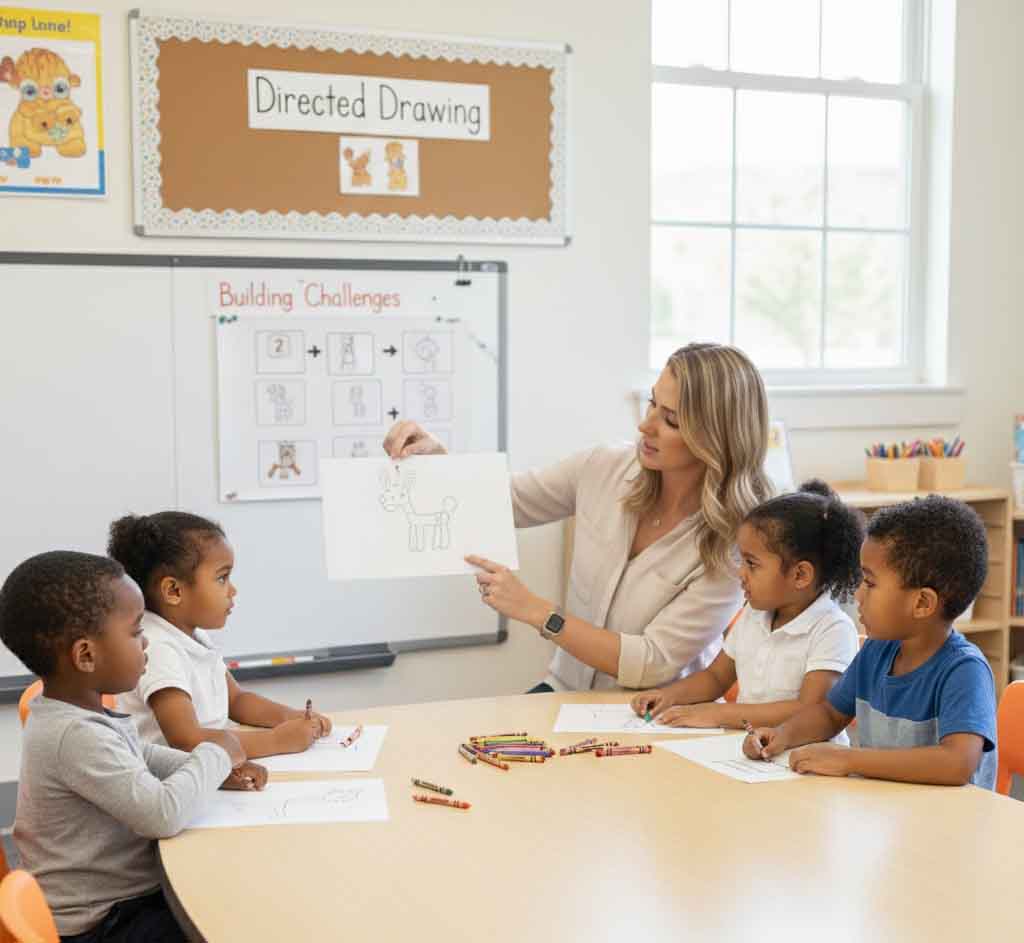
Guide students step-by-step to draw an image.
This improves:
- Listening skills
- Confidence
- Fine motor control
19. Collage Creation
Provide magazines, paper scraps, and glue.
Let students create themed collages:
- Animals
- Seasons
- Colors
20. Music and Movement
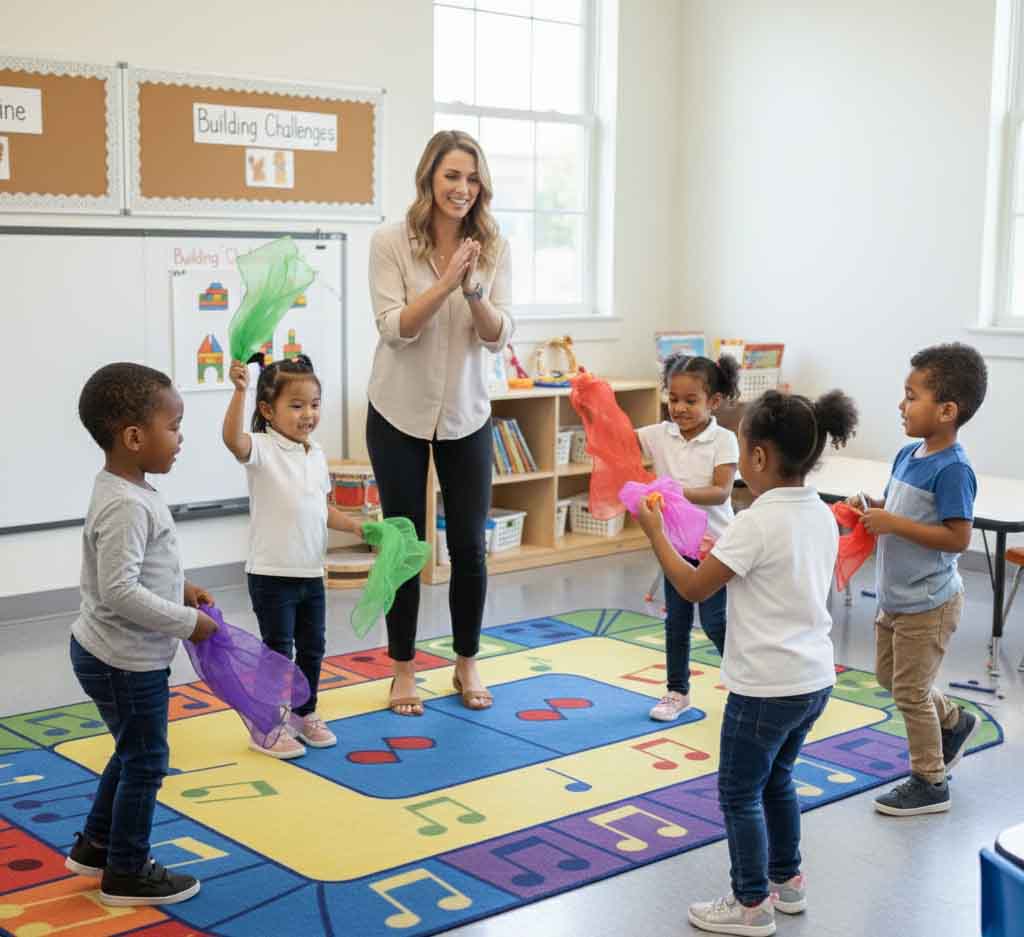
Use rhythm sticks or clapping patterns.
Students follow patterns and create their own rhythms.
Differentiation in Small Group Activities
Not all students learn at the same pace. Small group instruction makes differentiation manageable.
How to Differentiate Effectively:
- Change task difficulty
- Adjust pacing
- Provide extra support
- Offer extension activities
Flexible grouping ensures every child receives appropriate challenges.
Classroom Management Tips for Small Group Success
Small group activities only work when routines are clear.
Best practices:
- Teach expectations explicitly
- Use visual schedules
- Keep instructions short
- Prepare materials ahead of time
- Start with short sessions
Consistency builds independence.
Assessing Learning During Small Groups
Small group time is ideal for informal assessment.
What to observe:
- Skill mastery
- Participation
- Communication
- Problem-solving strategies
Use:
- Checklists
- Notes
- Quick assessments
This data helps guide future instruction.
Common Challenges and Solutions
Challenge: Students Finish Too Quickly
Solution: Provide extension tasks or challenge cards.
Challenge: Noise Levels
Solution: Teach voice levels and use visual cues.
Challenge: Students Needing Constant Help
Solution: Model independence and use help cards.
How Often Should You Use Small Group Activities?
Ideally, small group activities should be used daily in kindergarten. Even 30–45 minutes per day can make a significant impact.
Short, consistent sessions are more effective than long, infrequent ones.
Final Thoughts: Why Small Group Activities Matter
Small group activities for kindergarten create meaningful learning experiences. They allow teachers to connect with students, address individual needs, and build essential academic and social skills.
When thoughtfully planned and consistently implemented, small group instruction transforms the classroom into a space where every child feels seen, supported, and capable.
Whether you are teaching literacy, math, SEL, or STEM, small group activities help kindergarten students grow with confidence and joy.

